

Research & field stories
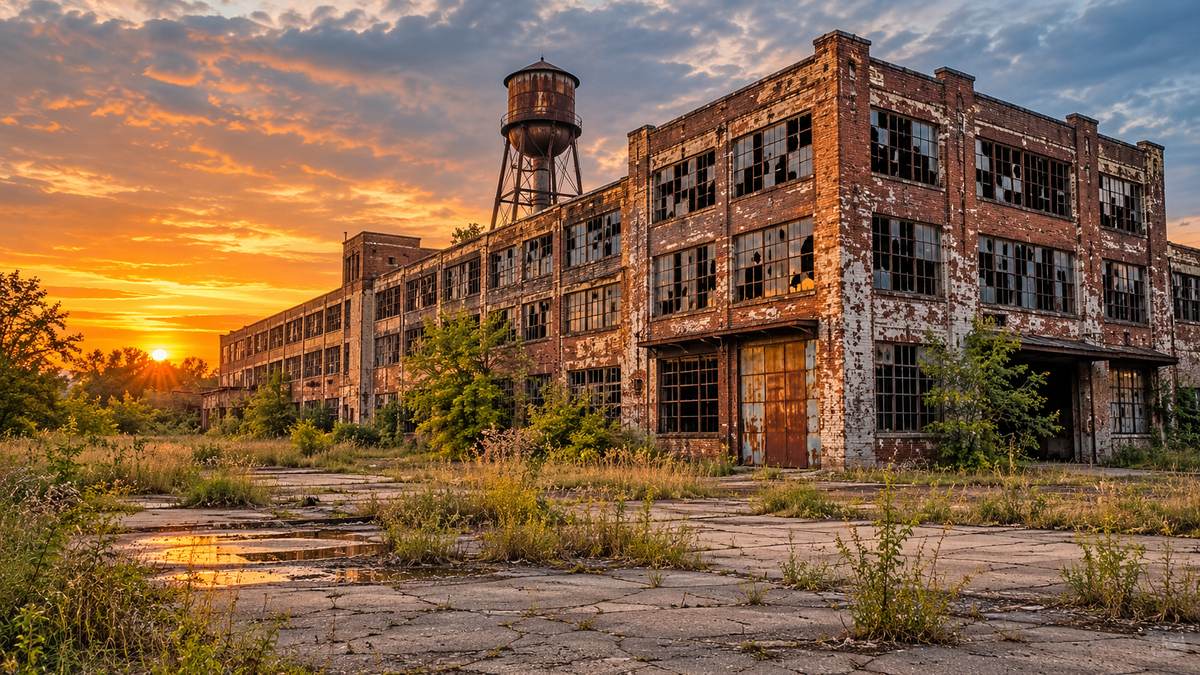
An abandoned buildings in the US is a non-residential structure, such as a factory, school, hospital, mall, office or church, that has been left unused and uncared for. Almost every one still has a legal owner, so exploring, finding or buying one is a legal process, not a free claim. No official national count exists.
An abandoned building is a non-residential structure that its owner has stopped using, maintaining or securing, even if that owner still holds legal title.
This guide covers the main types, the law on entering and buying, and the best-known US locations. The status of each famous site was checked in November 2026. It is written for curious readers and for buyers weighing a commercial project.
What is an abandoned building?
The words “abandoned,” “vacant” and “condemned” get mixed up all the time. They mean different things, and the difference matters if you want to enter, report or buy a building. A vacant building can be empty for a few weeks between tenants. An abandoned building has been left to decay. A condemned building has been declared unsafe by a local authority.
| Term | What it means | What sets it apart |
|---|---|---|
| Vacant building | Empty, but the owner still pays taxes, maintains it and keeps it secure | Empty does not mean neglected. Many vacant buildings are listed for sale or lease |
| Abandoned building | Empty, and the owner has stopped caring for it | Upkeep, security and often tax payments have lapsed. The owner usually still holds title |
| Condemned building | Declared unsafe or unfit by code enforcement | A legal status that can come with a vacate or demolition order. It can apply to occupied buildings too |
| Zombie property | A property in foreclosure that the owner has left, while the lender has not finished the process | Mostly a term for houses. Nobody maintains it and the title sits in limbo |
Our guide to abandoned vs vacant vs zombie vs condemned property explains each term in more detail.
What is a condemned building?
A condemned building has been declared unsafe or unfit to occupy by a local code enforcement office. It may be empty or occupied, and a demolition or repair order may follow. Condemned and abandoned are not the same thing. An abandoned building may never be condemned, and a condemned building may still have an owner who wants to fix it. A building only becomes condemned when the local authority says so. Century III Mall near Pittsburgh shows how it works. The mall closed in 2019. After a fire and a teen’s fall through the roof, it was condemned in 2023. It has since been demolished.
How many abandoned buildings are there in America?
No one knows. There is no official count of abandoned buildings in the United States.
Here is why:
- No federal registry counts abandoned buildings.
- Cities and states define the term differently, so local counts cannot be added together.
- Many abandoned buildings are privately owned and never reported to anyone.
- A building’s status changes. One can be vacant this year, abandoned next year and demolished the year after.
You may see Census Bureau figures on vacant housing units. Those numbers describe houses and apartments, not factories, schools, hospitals or malls. They do not show how many abandoned buildings exist. The US has many abandoned houses in America, but that is a different question from how many abandoned buildings it has. If a website gives you one national number for abandoned buildings, ask where it comes from and how it was counted. Most of the time, there is no good answer.
Types of abandoned buildings in the US
Each building type has its own problems and its own opportunities. This table gives the short version, and each type is covered in more detail below. Some states and cities have more of one type than others. Detroit, for example, has many abandoned houses in Detroit, including factories, schools and other large buildings left behind by industrial change.
| Type | Typical examples | Main issue for finders and buyers |
|---|---|---|
| Factories and mills | Former plants, textile mills | Contamination and cleanup |
| Schools | Closed public school buildings | Public ownership, older materials |
| Hospitals and asylums | Trans-Allegheny Lunatic Asylum (WV) | Size, hazardous materials |
| Malls | Century III Mall (PA) | Multiple owners, huge parking areas |
| Offices | Vacant towers and office parks | Layouts that are hard to convert |
| Churches | Closed parishes and chapels | Congregation or diocese ownership |
| Hotels and resorts | Closed roadside and seasonal hotels | Liens, size, seasonal economies |
| Train stations and depots | Michigan Central Station (MI) | Scale and historic rules |
| Theaters | Closed movie palaces | Roof damage, ornate interiors |
Factories and mills
Factories and mills are the classic abandoned building. They are solid, they have lots of floor space, and many are in cities with good transport links. Their main problem is contamination. Old industrial sites often need an environmental assessment and cleanup before they can be used again. That can cost more than the building itself.
Schools
Schools close when districts consolidate or enrollment drops. Many are owned by a school district or a city, so buying one means dealing with a public body. The buildings are often large and solid, but they may contain asbestos and lead paint. Zoning and community use can also limit what you can do with them.
Hospitals and asylums
Hospitals and asylums tend to be large campuses with many connected buildings. The Trans-Allegheny Lunatic Asylum in West Virginia is one of the best-known examples. It is now open for tours. Many other former hospitals are still empty, and their size and hazardous materials make them expensive to bring back.
Malls
A dead mall is an enclosed shopping mall with high vacancy and closed anchor stores. Malls are hard to reuse because they are large, have multiple owners or tenants, and sit on huge parking lots. Some have been turned into offices, housing or warehouses. Others have been demolished.
Offices
Offices sit empty for many reasons, including changing work patterns and older layouts. Converting offices into homes is popular, but it is not always easy. Deep floor plates, low ceilings and plumbing limits can make a conversion costly.
Churches
A closed church is usually owned by a congregation, a denomination or a diocese. That means the sale is often a slow, formal process. Churches have high ceilings, stained glass and open halls, which can suit homes, event spaces or arts venues, but planning rules may limit the change of use.
Hotels and resorts
Hotels and resorts are often closed after tourism shifts, highways move traffic elsewhere, or owners run out of money. They can look like a bargain, but they often come with liens, large repair bills and a location that no longer draws visitors. Check why the last owner left before you buy.
Train stations and depots
Railroad stations were built to impress, and many are enormous. Michigan Central Station in Detroit is the best-known example. After about three decades empty, it was restored by Ford and reopened in 2024. Not every station has a buyer like Ford. Many are still empty, and historic rules can limit what you can change.
Theaters
Old movie palaces and single-screen theaters often closed when audiences and chains moved on. Their interiors are ornate, but roofs and seating can be in poor condition. They work best as event spaces, performance venues or community projects, and they often need public funding to survive.
Famous abandoned buildings in the US
Here is where the best-known sites stand as of November 2026. Status can change, so check each site’s own website before you visit. Most of these places are owned by someone. Do not enter without permission. The cities with the most abandoned houses are not always the places with the most famous abandoned buildings. Some famous sites are in small towns, not big cities.
| Place | State | Status |
|---|---|---|
| Michigan Central Station | Michigan | Restored. Reopened June 6, 2024 |
| Buffalo Central Terminal | New York | Restoration under way, not complete |
| Houston Astrodome | Texas | Still vacant. Future undecided |
| Eastern State Penitentiary | Pennsylvania | Historic site open for tours |
| Trans-Allegheny Lunatic Asylum | West Virginia | Open for guided tours |
| Centralia | Pennsylvania | Mine fire still burning. Few residents |
| Bodie | California | State historic park in “arrested decay” |
| Garnet | Montana | Managed by the BLM. Open to visitors |
| Old Cahawba | Alabama | State archaeological park |
| Rhyolite | Nevada | Managed by the BLM. Free to visit |
Restored or being restored
Michigan Central Station (Detroit). The station opened in 1913, and its last train left in January 1988. It sat empty for about three decades. Ford bought it in 2018 and spent six years restoring it. It reopened on June 6, 2024, as a hub for mobility and innovation. It is not abandoned anymore, but it is the best example of a famous abandoned building being brought back to life.
Buffalo Central Terminal (New York). This terminal is owned by a nonprofit, the Central Terminal Restoration Corp., and the work is being done in phases. The building is open for public events and tours, and redevelopment is under way. The site is enrolled in New York’s brownfield program, and a brownfield cleanup agreement was filed in July 2026. Plans include housing and commercial space. The project is not finished, and the housing timeline is not confirmed.
Still vacant
The Houston Astrodome (Texas). The Astrodome is still empty, and its future is undecided. A Harris County study released in December 2025 looked at options and costs. A conservancy formed in November 2026 is working to save the building, but no decision has been made. The Astrodome is sometimes called the “Eighth Wonder of the World.” It is not open to the public.
Ghost towns and preserved sites
Eastern State Penitentiary (Philadelphia). The prison operated for 142 years and held roughly 80,000 people. Today it is a historic site with guided tours and events. Opening hours change by season.
Trans-Allegheny Lunatic Asylum (Weston, WV). Also known as Weston State Hospital, this National Historic Landmark offers historic and paranormal tours. It is not abandoned. It is open for visitors, but it is closed on some days, so check before you go.
Bodie (California). Bodie is a California state historic park and National Historic Landmark. California State Parks preserves it in “arrested decay,” which means buildings are kept as they are, not restored. It is open daily in summer and has limited winter access. The day-use fee is $8 for adults and $5 for children aged 5-17.
Garnet (Montana). Garnet is managed by the Bureau of Land Management and is reached by a gravel road. The day-use fee is $3, and the site is open in summer. The road can close in winter.
Old Cahawba (Alabama). Alabama’s first state capital (1820-1826) is now an archaeological park run by the Alabama Historical Commission. It is open to visitors.
Rhyolite (Nevada). This gold town was founded in 1905 and is managed by the BLM. It is free to enter and open daily from sunrise to sunset.
Centralia (Pennsylvania). A coal mine fire has burned under the borough since May 27, 1962. The population fell from about 1,000 in 1981 to five people in 2020. Most of the town is gone. The roads are closed, and the site is not a tourist attraction.
Why do buildings get abandoned?
Buildings are rarely abandoned for one reason. Common causes include:
- Economic change. Industries move or shrink, and the buildings built for them lose their purpose.
- Newer replacements. The Trans-Allegheny asylum closed when a modern hospital took over in 1994.
- Loss of use. Passenger rail declined, and Michigan Central’s last train left in 1988.
- Unpaid taxes. When owners stop paying, a building can slide into a tax delinquent properties status and end up in a tax sale.
- Cleanup costs. If fixing contamination costs more than the building is worth, owners may walk away.
- Owner problems. Death, bankruptcy, legal fights and missing heirs can freeze a property for years.
Many of the same causes apply to homes. Our guide on why houses get abandoned explains the residential side.
Is it legal to explore an abandoned building?
In most cases, no. Entering a private building without the owner’s permission is trespassing, which is a crime in every state. The exact charge and penalty vary, but you can be arrested, fined or sued. If the building is unsafe, you can also be hurt. The same rule applies to houses and commercial buildings. Urban exploration, often called urbex, is the hobby of entering and photographing abandoned structures. It is popular online, but it does not make entry legal.
You can explore legitimately in these ways:
- Take a tour. Eastern State Penitentiary and the Trans-Allegheny Lunatic Asylum both run official tours.
- Visit protected sites. State parks and BLM-managed sites such as Bodie, Garnet and Rhyolite are open to the public.
- Get written permission. Ask the owner for a signed agreement before you enter, and carry a copy.
- Shoot from public property. Photographing a building from a public sidewalk or road is generally allowed. Stepping onto the property is not.
If you later decide to pursue ownership, see the legal steps for owning an abandoned property.
Can you buy an abandoned building?
Yes, but you buy it from its legal owner or through a legal sale. You cannot claim a building by walking in, living in it or fixing it up.
The main routes are:
- Tax sale. When owners fall behind, the government may sell the lien or the property. Whether you get a lien or a deed depends on your state. Our guide to tax lien vs tax deed states explains the difference. The Supreme Court case Tyler v. Hennepin County dealt with what happens to surplus value after a tax foreclosure sale, so check your state’s rules before you bid.
- Foreclosure or REO. A lender takes the building back and then sells it as real estate owned (REO).
- Land bank. A land bank is a public entity that takes and sells vacant or abandoned properties, often with clear title.
- Direct from the owner. Many owners will sell if you find them and make an offer.
A house and a commercial building share the same basic steps, which are outlined in our guide on how to buy an abandoned house. For the commercial version, see our guide to buying an abandoned building.
Before you buy, check three things:
- Zoning. What you plan to do must be allowed on that land.
- Environmental review. Test for contamination before you buy, because liability can follow the new owner.
- Financing. Home mortgages are made for houses. Commercial buildings usually need commercial or investor loans, so line up financing before you commit.
Adverse possession is not a shortcut. It means claiming ownership by occupying a property openly for a long time. The rules and time periods vary by state, and a commercial building is rarely a good test case. For a step-by-step guide to the process, see how to legally buy abandoned property.
How to find abandoned buildings near you
Start with records, not trespassing. Here is a practical order:
- Spot it from the street. Look for boarded windows, overgrown lots and no signs of activity. Stay on public property.
- Look up the parcel. Use your county assessor’s site to find the owner and tax status. Our list of county assessor websites by state can help you find the right office.
- Find the owner. The steps are in our guide to who owns an abandoned house.
- Ask code enforcement. The local code office may keep lists of vacant, unsafe or condemned buildings.
- Check land bank inventories and tax-delinquent lists. These show what the public sector is selling or may soon sell.
What does it cost?
Cost depends on the building, not the asking price. The purchase price is often the smallest part. Before you buy, budget for:
- back taxes and liens
- environmental testing and cleanup, including asbestos and lead abatement
- structural and roof repairs
- utilities and code upgrades
- insurance, which can be hard to get for vacant buildings
- carrying costs while the building sits empty
Scale varies enormously. The Michigan Central project is reported in the hundreds of millions of dollars. At the other end, a small rural building can cost far less to buy and far more to fix than you expect. For financing ideas, see our guide to rehab loans for abandoned houses. Brownfield status is a special cost risk. Buffalo Central Terminal, for example, is enrolled in New York’s brownfield program. That means cleanup costs and rules are part of the project.
What happens to an abandoned building?
An abandoned building usually ends up in one of four places:
- Demolition. Century III Mall was condemned in 2023 and has since been torn down. Its owner faced charges filed by the Pennsylvania Attorney General.
- Restoration. Michigan Central Station was fully restored by Ford.
- Redevelopment in phases. Buffalo Central Terminal is being restored step by step, with nonprofit and developer partners.
- Preservation as it stands. Bodie is kept in arrested decay.
Some buildings go through a land bank first, which can clear the title and match the property with a buyer.
Can an abandoned building be saved from demolition?
Sometimes. The National Register of Historic Places is the federal list of historic properties. Listing alone does not stop demolition. It can help a project qualify for tax credits and grants, and it can slow a demolition, but it does not protect a private building on its own. Local historic rules are often stronger. If a building is listed locally, you may need permission to change or demolish it.
Risks and scams
Physical danger. Floors, roofs and stairs fail without maintenance. In June 2023 a teenager fell through the roof of Century III Mall. Others have died or been seriously hurt in similar falls. Do not enter a building that is not open to the public.
Legal risk. Entering without permission is trespassing. Owners can also be liable if someone gets hurt on their property, even if that person entered without permission.
Buyer risk. Watch for these problems:
- sellers who do not own the building
- pressure to wire money quickly
- hidden liens, back taxes or condemnation orders
- tax-sale purchases made without environmental checks
Read abandoned house buying scams to avoid before you pay anything.
FAQ
How many abandoned buildings are there in America?
No one knows. There is no official count of abandoned buildings in the US, no federal registry, and no reliable way to add local counts together. Census vacancy figures are about houses and apartments, not buildings.
Is it illegal to enter an abandoned building?
Usually yes. Entering private property without permission is trespassing, which is a crime in every state. Tours, public sites and written permission are the legal ways in.
Can you buy an abandoned building?
Yes, through a legal sale or directly from the owner. Common routes are tax sales, foreclosure or REO, land banks and direct purchase. You cannot claim a building by occupying it.
Can an abandoned building be saved from demolition?
Yes. Michigan Central Station was restored by Ford and reopened in 2024, and Buffalo Central Terminal is being restored in phases. Listing on the National Register can help with funding, but it does not stop demolition on its own.
Are abandoned buildings dangerous?
Yes. Rotten floors, weak roofs, asbestos, lead, mold and chemical residue are all common. Squatters and other people can also be a risk. Do not enter a building that is not open to the public.
What is a dead mall?
A dead mall is an enclosed shopping mall with high vacancy and closed anchor stores. Many sit empty or are demolished. Century III Mall is a recent example. It closed in 2019, was condemned in 2023 and has been demolished.

AbandonedHouse
We explore the history, architecture and context behind America’s overlooked places through research-led storytelling and responsible documentation.