
Research & field stories
Cities with the most abandoned houses cannot be named from a verified ranking, because no federal agency counts abandoned houses. The closest evidence is 2022 vacancy data: New Orleans had the highest vacancy rate, at 22.9%, while Detroit had the most vacant units, at 68,048. Vacant does not mean abandoned, so these are the best available proxies, not a ranking.
The closest historical comparison is SmartAsset’s 2023 study of 343 U.S. cities with at least 100,000 residents. It used 2022 American Community Survey (ACS) data.
New Orleans had the highest vacancy rate at 22.9%. Detroit had the most vacant units among the top 10, at 68,048.
Those are vacancy findings from 2022, not counts of abandoned houses and not a current ranking. The rest of this article explains what the numbers can and cannot show.
| Rank | City | State | Vacancy rate | Vacant housing units |
|---|---|---|---|---|
| 1 | New Orleans | Louisiana | 22.9% | 44,746 |
| 2 | Tuscaloosa | Alabama | 22.5% | 12,050 |
| 3 | Detroit | Michigan | 21.9% | 68,048 |
| 4 | Pompano Beach | Florida | 21.7% | 13,376 |
| 5 | Fort Lauderdale | Florida | 21.4% | 21,751 |
| 6 | Clearwater | Florida | 20.7% | 12,641 |
| 7 | Paradise | Nevada | 20.5% | 19,210 |
| 8 | Birmingham | Alabama | 18.9% | 20,644 |
| 9 | Jackson | Mississippi | 18.7% | 14,325 |
| 10 | Cape Coral | Florida | 18.4% | 18,392 |
Source: SmartAsset, “Cities Where Housing Vacancy Rates Are Highest – 2023 Study,” using 2022 ACS data. The study covers cities with populations of at least 100,000.
The Difference Between Abandoned Houses and Vacant Homes
Vacancy describes whether anyone lives in a unit. Abandonment describes what has happened to the property, and it needs its own evidence.

What Counts as a Vacant Housing Unit?
Census statistics sort vacant units by status. Categories include homes for rent, homes for sale, units rented or sold but not yet occupied, seasonal homes, and units held off the market.
A tidy house with a “for sale” sign is vacant. So is a cabin its owner uses on summer weekends.
What Makes a House Abandoned?
In this article, an abandoned house is a home whose owner has left it without upkeep or any plan for it, as shown by records, inspections, or official findings – not simply a home that is empty. The legal test depends on state and local law.
Vacancy alone does not meet it. Records, inspections, or official findings are what establish abandonment.
Vacant, Abandoned, Foreclosed, and Condemned Are Different
Foreclosure is a legal process. Condemnation is an official finding about safety or habitability. Our guide to abandoned, vacant, zombie, and condemned properties explains how these terms differ.
Neither automatically proves a house is abandoned. A foreclosed home may still have an owner living in it, and a condemned building may have an owner planning repairs.
Appearance alone cannot establish legal abandonment, and a vacant house can be in excellent shape.
Cities With the Most Abandoned Houses: Which Cities Have the Highest Vacancy Rates?
The table above ranks cities by vacancy rate, the closest available measure for the cities with the most abandoned houses. Two cities stand out, for different reasons. For the state-level picture, see our guide to housing vacancy rates by state.
New Orleans, Louisiana: Highest Reported Rate
New Orleans reported 22.9% vacancy in 2022, with 44,746 vacant units, the highest rate among the cities with the most abandoned houses in this comparison. Nearly 23 of every 100 housing units were empty.
The percentage compares vacant units with total housing units. It does not tell us how many were neglected.
Detroit, Michigan: Largest Count in the Top 10
Detroit reported 68,048 vacant units, more than any other city in the top 10. Its rate was 21.9%, below New Orleans.
The count shows scale. Nothing in the study says all 68,048 units were abandoned.
Other Cities in the Ranking
Florida holds four of the top six places. Alabama, Nevada, and Mississippi cities fill most of the rest.
Each city has its own housing market, so the ranking says little about why a given place appears on it.
Why the Ranking Changes When You Count Homes Instead of Rates
Rates and counts answer different questions. Mixing them up makes a city look better or worse than the data supports.
Vacancy Rate Measures Proportion
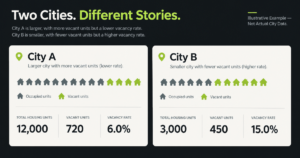
A rate divides vacant units by all housing units. A city with a small housing stock can post a high rate with fairly few empty homes.
Vacant-Unit Count Measures Volume
A count shows how many units sit empty. A big city can lead in volume while its rate stays lower.
That is the Detroit and New Orleans contrast. Detroit has more empty units, New Orleans has a higher share of them.
Why Some Cities Have High Vacancy Without Widespread Abandonment
Many empty homes are empty for ordinary reasons. Reading a vacancy statistic as abandonment overstates the problem.
Seasonal and Recreational Properties
Second homes and occasional-use properties count as vacant. A beach house used six weeks a year appears in the data the same way as a boarded-up one.
This matters in Florida, where seasonal housing is common. USAFacts reported a 34.1% gross vacancy rate for the Cape Coral–Fort Myers metro area in 2024, and that figure includes seasonal homes.
Homes Listed for Rent or Sale
Housing markets always have turnover. Units between tenants or buyers show up as vacant, and many return to use within weeks or months.
Units Awaiting Occupancy, Repairs, or Other Uses
Some homes are rented or sold but not yet occupied. Others are being renovated or held back during an estate or legal matter.
A vacancy status does not reveal a home’s condition or prospects. Without local evidence, no one should assign a cause to a particular city. For a broader look at causes, see why houses get abandoned.
What Newer U.S. Vacancy Data Tell Us, and What They Cannot
National figures give context. They do not rank cities.
USAFacts reported about 15.1 million vacant U.S. housing units in 2024, a gross vacancy rate of 10.3%. The FRED series built on Census data shows 15,643,000 vacant units in Q2 2026.
The two numbers come from different sources and periods, so they do not form one trend line. Neither one measures abandoned houses. For a separate look at national estimates, see how many abandoned houses are in the US.
Nobody can split a national count among named cities. Likewise, city, metro, and national figures should not share a chart.
How to Verify Whether a House Is Actually Abandoned
Verification starts with records, not with how a house looks from the street. These steps work in most places, and the signs a house is really abandoned can help you decide what to look up first.
Check Municipal Vacant-Property and Land-Bank Records
Some cities keep vacant-property registries or land-bank inventories. Read the eligibility rules, because each list covers only its own program’s properties.
Review Code Enforcement, Safety, and Nuisance Records
Violation notices and unsafe-structure orders are useful leads. They point to a problem but do not prove abandonment by themselves.
Check Ownership, Tax, and Court Records
Parcel records show the listed owner and tax status. Court files can show foreclosure or probate cases.
Delinquent taxes or a foreclosure filing do not settle the question. They add evidence.
Confirm the Local Definition and Respect Property Rights
Ask the local authority how it defines abandonment. Contact the owner when you can find one.
Do not enter a private or unsafe building without permission. A house that looks empty may still belong to someone.
Can High-Vacancy Cities Be Ranked by Genuinely Abandoned Houses?
Not with the evidence available now. No list in this article ranks the cities with the most abandoned houses by abandoned homes, because no such count exists. A defensible ranking would need matching records from each city.
That means official abandonment inventories, vacant-building registrations, code-enforcement files, ownership and tax data, and local legal definitions. Cities would need the same coverage, counting rules, and dates.
City records can support conclusions about one place. Adding together incompatible municipal lists does not produce a reliable national top 10.
What About Baltimore, Cleveland, and St. Louis?
Baltimore, Cleveland, and St. Louis are often named in lists of cities with the most abandoned houses, but they do not appear in the 2022 SmartAsset top 10 by vacancy rate used in this article. This article has no verified abandoned-house count for any of them, so it cannot rank them against the cities in the table above.
That does not mean these cities have no abandoned houses. It means the evidence used here, vacancy rates and counts for cities of at least 100,000 people, does not support placing them in a ranking, and no source in this article supplies a comparable count for them.
Frequently Asked Questions
Which U.S. city has the most abandoned houses?
The research cannot name a winner among the cities with the most abandoned houses for actual abandonment. The closest supported comparison is the 2022 vacancy ranking, led by New Orleans at 22.9%.
Which city has the highest housing vacancy rate?
In SmartAsset’s 2022 comparison, New Orleans led with 22.9%. The study covers 343 cities with at least 100,000 residents.
Does Detroit have the most abandoned houses in America?
No source here establishes that Detroit leads the cities with the most abandoned houses. Detroit had 68,048 vacant units in the 2022 top-10 comparison, which is a vacancy count.
What is the difference between a vacant and an abandoned house?
Vacancy describes occupancy status. Abandonment requires separate evidence under an applicable definition.
Why do some cities have high vacancy rates?
Causes include rentals and homes for sale, units awaiting occupancy, seasonal use, and other off-market reasons. A specific cause needs local evidence.
Why do people ask about Baltimore, Cleveland, and St. Louis among the cities with the most abandoned houses?
These cities are frequently named in online lists of cities with the most abandoned houses, but they are not in the 2022 SmartAsset top 10 by vacancy rate, and this article has no verified abandoned-house count for them, so they cannot be ranked here.
Are vacant houses usually for sale?
Not necessarily. Vacant units include rentals, homes for sale, and units held off the market.
How can I find abandoned houses in a city?
Start with vacant-property records, land banks, code-enforcement files, and ownership records. No single record is conclusive everywhere.
Can I buy an abandoned house?
An apparently abandoned house still has an owner, and you cannot claim it by finding it. Check title, liens, local law, and the actual sale process first. If you want to see what is on the market, browse abandoned houses for sale, or read about what happens to abandoned houses nobody claims.
Are ghost towns the same as cities with abandoned houses?
No. Ghost-town lists describe settlements or historic sites, while this comparison covers housing units inside city limits.
Are newer city vacancy rankings available?
The 2022 SmartAsset study is the verified historical ranking here. A refreshed ACS comparison would update it once newer city-level data are compiled.
Conclusion: Read Vacancy Rankings as a Starting Point
Vacancy rates show what share of a city’s housing is empty, which is the measure used here for the cities with the most abandoned houses. Vacant-unit counts show how many homes there are.
The 2022 figures cover a defined set of large cities and have not been updated. They do not identify abandoned houses. For wider context, see abandoned houses across America.
For a specific property or neighborhood, go to official records. They can tell you who owns a house, what condition it is in, and what the law says about it.

AbandonedHouse
We explore the history, architecture and context behind America’s overlooked places through research-led storytelling and responsible documentation.
More stories for curious minds
Pros and Cons of Buying an Abandoned House
A run-down house with a low price can look like a steal, and the pros and cons of…
How to Buy an Abandoned House: Step-by-Step (US)
How to buy an abandoned house: find a property, identify the owner through county assessor and tax records,…