

Research & field stories
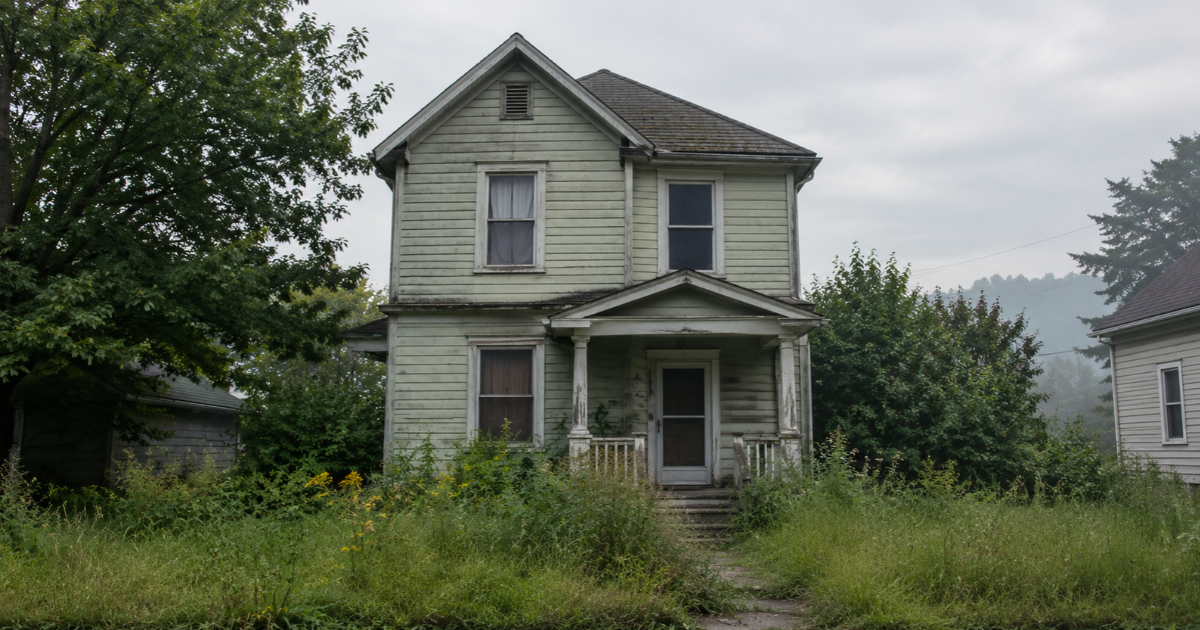
Signs of an abandoned house include overgrown landscaping, boarded or broken windows, piling mail, dark windows over time, and chronic tax delinquency – but no single sign proves abandonment. A house is only really abandoned when ownership, occupancy, and legal status point the same way, so check county records before drawing a conclusion.
No single sign proves a house is abandoned. Tall grass, boarded windows, and a mailbox stuffed with flyers describe a property’s condition, but they can’t tell you who owns it, whether anyone lives there, or what the law says about it.
A clue is a reason to look further, so this guide ranks the common ones by how much they can support. It then covers the public records and local offices that can confirm or rule them out.
Quick Answers
- No single visual sign proves a house is abandoned. Visible neglect describes condition, not occupancy or legal status.
- Vacant, neglected, seasonal, foreclosed, zombie-foreclosure, condemned, and abandoned are different things, and the definitions change by source and jurisdiction.
- Clues from different categories (appearance, activity, administrative records) carry more weight together than several clues of the same kind. This is an editorial framework, not a validated score.
- Verify through the county assessor, the recorder or register of deeds, tax and code-enforcement records, and the agency behind any posted notice.
- Census and USPS data measure vacancy and mail-delivery status. Neither is a direct count of abandoned houses.
- Do not enter. Federal safety guidance warns that vacant and abandoned structures can be dangerous, and neglect is not permission to enter, claim, or buy.
Vacant, Neglected, Abandoned: Why the Words Matter
People use these words interchangeably, and the agencies that define them do not. A home can be vacant and well kept, or neglected and fully occupied. Our guide to abandoned, vacant, zombie, and condemned properties covers the differences in more depth.
| Term | What the source says | Context and caveat |
| Vacant (Census) | No one is living in the unit at interview; temporary occupants staying two months or less with a permanent home elsewhere are still counted as vacant. | Statistical category for housing units, not a legal finding. |
| Vacant (U.S. Fire Administration) | An unoccupied building with an available, interested owner, usually with current taxes. | Operational fire-safety guidance, not universal law. |
| Abandoned (U.S. Fire Administration) | No owner or an absent landlord, unpaid taxes, and no legal occupancy. | Same limit: a safety definition, not a statute. |
| Abandoned (NIOSH) | A structure not used, not maintained, and not preserved for future use. | Written for firefighter safety, not for title or housing-market questions. |
| Abandoned/possibly condemned (Census) | A subcategory of “other vacant” that includes units vacant because abandoned, plus units reported as to be demolished or condemned without positive evidence such as a sign, notice, or mark. | A survey response category, not a verified count of legally abandoned houses. |
| Seasonal | A Census vacancy category covering part-time residences, hunting cabins, beach houses, and timeshares. | Seasonal vacancy is not abandonment. |
| Foreclosed | A process status. Foreclosed units can land in several Census housing categories, including “other vacant,” seasonal, or occupied and under repair. | Foreclosure alone does not establish abandonment. |
| Zombie foreclosure | A one- to four-unit house with a delinquent mortgage or in foreclosure, commonly vacant and deteriorating while the foreclosure stays unresolved. | Defined in the context of a New York State initiative; not a national legal definition. |
| Condemned | An official determination. Census excludes units posted as condemned from the vacant-housing inventory. | A condemned home may be vacant or abandoned, but the status comes from local officials. |
Why the Definitions Don’t Line Up
Fire-service guidance looks at owners, taxes, and upkeep. The Census sorts housing units by occupancy category, so the two mean different things by “abandoned.”
HUD’s Neighborhood Stabilization Program adds a third version. It widened its own “abandoned” test to cover properties with mortgage or tax payments 90 days delinquent, or that were uninhabitable and left uncorrected for 90 days (HUD). That definition applies to the program only, and any legal conclusion depends on current state law and local ordinances.
Seasonal Homes: A Common Mix-Up
The Census Bureau reports that the largest category of vacant housing is seasonal, recreational, or occasional use. Its May 2023 article cites more than 4.3 million such units, a figure tied to the 2020 Census data it discusses, so it is not a current count.
A shuttered lake cabin in February counts as vacant under that measure without being abandoned.
What Clues Suggest a House May Be Abandoned?
Treat each clue below as a hypothesis formed from a public vantage point such as the sidewalk. The research behind this article found no validation study showing how often any single sign correctly identifies a vacant or abandoned house.
Overgrown Landscaping and Exterior Debris
Overgrown landscaping may point to deferred maintenance, and it can justify a second look. It does not show vacancy, because owners may be away, ill, or unable to keep up a yard.
Accumulated trash or debris works the same way. It describes condition and says nothing about who lives there.
Boarded or Broken Openings
The U.S. Fire Administration discusses securing vacant and abandoned structures, including boarding openings, as a safety measure. Boards can mean a building has been secured or has damaged openings, and they can also be precautionary, ordered by officials, or used during repairs.
They say nothing reliable about ownership, occupancy, or how long a building has stood empty.
Mail, Lights, and Vehicles
These are the weakest clues, and each has ordinary explanations. Mail that appears to be piling up may suggest deliveries aren’t being collected regularly, but forwarding, delivery errors, travel, or disability can produce the same look.
Dark windows and an empty driveway tell you even less. People use timers, keep few lights on, park elsewhere, use garages, or work irregular schedules. The evidence behind this article does not say how many visits would be enough to draw a conclusion.
Missing holiday decorations have no demonstrated value as an occupancy indicator, so they do not appear in the clue list.
Curtains that never move, bins that are never put out or brought in, newspapers or flyers stuck to a door, and no footprints or tire tracks in snow are also weak signs of an abandoned house. Each has an ordinary explanation, such as travel, illness, or a neighbor collecting mail. Dust-covered furniture or visible mold seen through a window is a condition clue, not proof that no one lives there. A missing or damaged electric meter is another visible clue, but it can also follow storm damage, theft, or a utility replacement.
Roof, Paint, Moisture, and Pests
Condition surveys used in local vacancy work look at visible problems such as peeling paint and roof damage. Moisture and pest problems belong in that same condition category.
Condition and occupancy are separate questions. An occupied house can be neglected, and a vacant one can be well maintained. The evidence gathered here does not support estimating how long a house has been vacant from its exterior.
Posted Notices
A notice on a door or window might concern an inspection, code enforcement, a foreclosure, a sale, repairs, or another process. Its meaning depends on who issued it and where.
Write down the exact wording, the date, and the issuing agency, leave the notice where it is, and ask that agency what it means. A notice alone is not grounds for calling a property abandoned.
Utility and Tax Signals
Most utility and tax clues sit in records, not in anything visible from the street. Center for Community Progress lists utility-service records and significant drops in usage among possible local indicators, and it recommends using them alongside other data and field observation.
The same page calls chronic tax delinquency a strong potential indicator of a problem property, and USFA includes unpaid taxes in its abandoned-building definition. Even so, a tax debt does not by itself prove no one lives there or that an owner has legally given up the property.
Which Signs Count for More When Combined?
No validated scoring system exists for house clues. Some commercial checklists attach sign counts or time bands to their lists, but the evidence behind this article includes no study, sample, or error rate that supports them, so this guide leaves them out.
A more defensible approach is to combine different kinds of information instead of stacking one kind. The framework below is editorial, and it measures nothing.
| Evidence type | Examples | What it can support | What it can’t do |
| Appearance | Overgrowth, peeling paint, boarded openings | A concern about maintenance or condition | Show occupancy or legal status |
| Activity | Dark windows, no vehicles, mail piling up | A reason to observe again and note dates | Prove no one lives there |
| Administrative | Posted notices, tax status, code records, vacancy registries | A documented lead that names an agency or process | Settle occupancy without reading the actual record |
| Corroboration | Several independent clues plus confirmation from an official source | A more defensible picture of the property’s status | Replace local legal review when title or legal status matters |
A neglected yard and a chronic tax delinquency come from two kinds of evidence, so together they justify a records check. Neither confirms anything alone, and a third look at the same overgrown yard adds less than checking the tax file.

How Do You Verify the Signs of an Abandoned House?
Center for Community Progress states that no single national dataset purely tracks vacant, abandoned, and deteriorated properties. Local vacancy strategies combine several data sources with field observation.
That gap shapes the workflow below, and what’s available varies by county and city.
- Observe from public property and write it down. Note the dates and describe what you saw without drawing conclusions.
- Check the county assessor. The assessor holds parcel and taxpayer information, which is a starting point for ownership questions.
- Check the recorder or register of deeds. In many places this office, or the county clerk, holds the official recorded deeds .
- Look for tax, code-enforcement, and registry records. Some cities keep a vacant-property registry, and many maintain code-enforcement files, though availability varies.
- Ask the issuing agency about any posted notice. Bring the exact wording and date you recorded.
- Consult a title professional or lawyer when legal title matters. Exterior clues and a single database cannot settle it.
Records Have Limits
Public records are a starting point, not a guarantee. They can lag behind unrecorded transfers, and records in rural or smaller communities may not be digitized.
An assessor’s listing may not reflect current legal title, and heirs’ property can complicate things further. Note the date you pulled each record, since updates arrive on different schedules.
What National Data Can and Can’t Tell You
Census tables count vacancy by category. They do not offer a property-level count of legally abandoned houses, and “other vacant” is a broad bucket that can include foreclosure, legal proceedings, repairs, extended absence, abandonment, and possible condemnation.
USPS-derived data classify addresses for mail-delivery purposes. Center for Community Progress describes categories for addresses vacant more than 90 days and for “no-stat” addresses, with duration bands such as 90 to 180 days, 180 to 360 days, and over a year, and it warns that carrier labeling can be inconsistent and methods can change. An address labeled that way hasn’t been field-verified as abandoned. For broader numbers, see how many abandoned houses are in the US and which cities have the most abandoned houses.
What to Do If You Find a Potentially Abandoned House
Do not go inside. The U.S. Fire Administration warns that vacant and abandoned structures can lack structural integrity and hold other hazards, and CDC/ATSDR guidance lists trespass, chemicals, structural failure, fire, crime, pests, and animals among the risks of entering.
A neglected appearance is not permission to enter, claim, or buy a property. Ownership rights can continue despite neglect or unpaid taxes. To see what happens when no owner is ever found, read about what happens to abandoned houses nobody claims.
If you’re a neighbor, contact your local code enforcement office or the agency that handles property conditions, and give them dated observations instead of conclusions. Exterior neglect can reflect owner illness, probate, renovation, or poverty (see why houses get abandoned for the wider picture), so not every worn-looking house is a problem to report. For anything urgent, call emergency services.
If you’re a researcher or photographer, stay on public property, check local rules, and avoid captions that assert a property’s legal status. A house that looks empty may have an owner, a family, or an estate behind it.
If you’re thinking of buying, the same verification applies. Identify the owner through county records and use a title professional before you contact anyone about an offer. The buying process itself is outside this guide, but you can browse abandoned houses for sale to see what is actually on the market.
FAQs
Can a house look abandoned while someone lives there, or look fine while empty?
Yes to both. Center for Community Progress separates property condition from occupancy, noting that occupied homes can be neglected and vacant homes can be maintained.
How long does a house have to sit empty to be legally abandoned?
The sources reviewed for this article don’t give a nationwide time threshold. Definitions depend on state law and local ordinances, so check the statute or municipal code for the place in question.
Can I tell how long a house has been empty by looking at it?
Not from the evidence gathered here. USPS duration categories describe how long an address has been classified for mail delivery, which is a different thing from a sidewalk estimate of how long a house has stood empty.
Does foreclosure mean a house is abandoned?
No. The Census Bureau explains that foreclosed units can fall into several housing categories, and some are occupied or under repair. A “zombie foreclosure” is a narrower case: a one- to four-unit house with a delinquent mortgage or in foreclosure, commonly vacant and deteriorating while the process stays unresolved.
Do unpaid property taxes prove a house is abandoned?
No. Center for Community Progress calls chronic tax delinquency a strong potential indicator of a problem property, and USFA includes unpaid taxes in its abandoned-building definition. A tax debt still doesn’t show that no one lives there or that the owner has legally given up the property, so check local records.
Is there a national database of abandoned houses?
Not a single one. Center for Community Progress states that no national dataset purely tracks vacant, abandoned, and deteriorated properties, so researchers combine sources with different definitions. Census vacancy categories and USPS address classifications help, but neither is a direct count of abandoned houses.
Does a boarded-up house mean it’s abandoned?
Not by itself. Boards can mean a building has been secured or has damaged openings, and they can be precautionary, ordered by officials, or used during repairs. They don’t establish ownership, occupancy, or how long a building has stood empty.
How do I find out who owns a house that looks abandoned?
Start with the county assessor for parcel and taxpayer information, then check the recorder, register of deeds, or county clerk for recorded deeds. Records can lag behind unrecorded transfers and may not be digitized in rural areas, so consult a title professional or lawyer when legal title matters.
Can I claim or buy a house that looks abandoned?
A neglected appearance gives you no right to claim a property, and ownership rights can continue despite neglect or unpaid taxes. If you’re interested in buying, identify the owner through county records and use a title professional before contacting anyone about an offer.
How can you tell if a house is abandoned from the outside?
You cannot tell for certain from the outside. Look for several signs of an abandoned house from different categories – appearance, activity, and records – then check the county assessor, tax, and code-enforcement records. No single outside sign proves abandonment.
Is it illegal to enter an abandoned house?
Entering a house you do not own or have permission to enter can be trespassing, even if it looks abandoned. Federal safety guidance also warns that vacant and abandoned structures can be dangerous. Stay on public property and report concerns to code enforcement.

AbandonedHouse
We explore the history, architecture and context behind America’s overlooked places through research-led storytelling and responsible documentation.
More stories for curious minds

Pros and Cons of Buying an Abandoned House
A run-down house with a low price can look like a steal, and the pros and cons of…
How to Buy an Abandoned House: Step-by-Step (US)
How to buy an abandoned house: find a property, identify the owner through county assessor and tax records,…