

Research & field stories
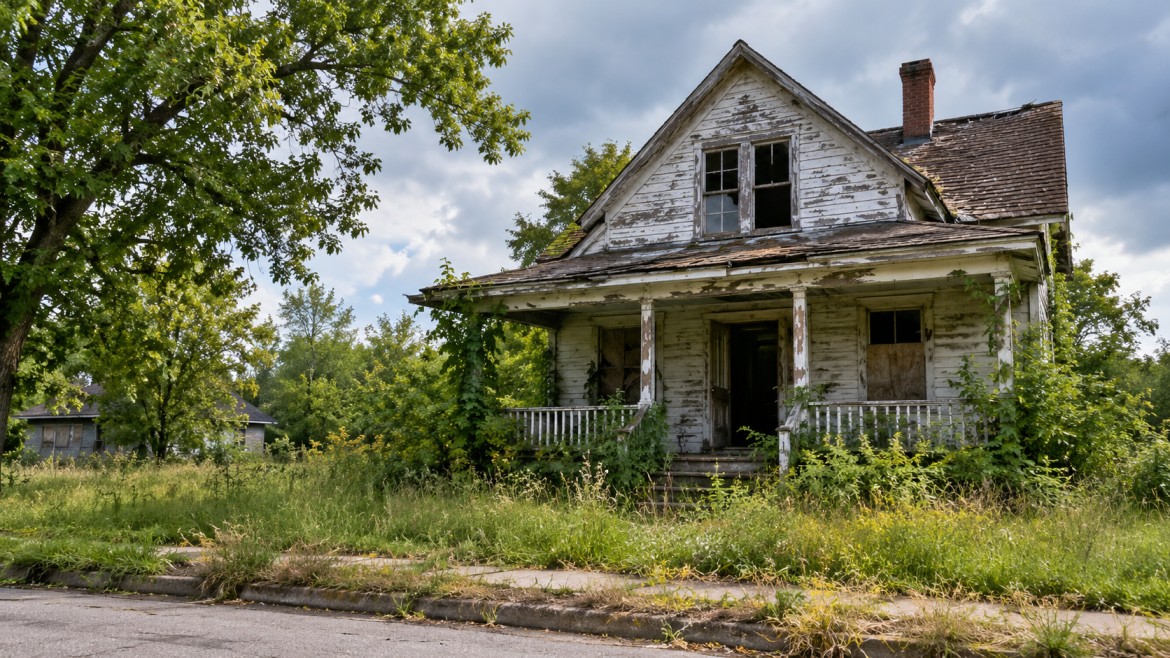
Abandoned houses in America are homes whose owners have stopped paying taxes, maintaining the property, and, in practice, walked away, yet almost every one still has a legal owner. About 15.1 million U.S. homes were vacant in 2024, according to USAFacts using Census Bureau data, but only a small share were truly abandoned.
What Counts as an Abandoned House?
In 2014, about one in five houses in Detroit was vacant. The city’s land bank alone held roughly 47,000 abandoned homes. By December 2025, that number was 942.
Detroit didn’t get there by counting better. The city got there by treating every abandoned house as what it is: a property with an owner, a tax history, and a legal path to a new owner.
That’s the idea behind this guide. The famous “15 million empty homes” number won’t help you find, buy, or fix an abandoned house.
We’ll show you what the data really says, what these buildings can cost their neighbors, and which legal routes can lead to ownership. A resource directory closes things out.
A vacant house is simply unoccupied. It might be for sale, between renters, or a seasonal cabin.
An abandoned house is one where the owner has stopped paying taxes, stopped maintaining it, and, in practice, walked away.
A condemned house has been declared unsafe by the city
A boarded-up house has had its doors and windows sealed, either by the owner or by the city.
Here’s the key point: even a collapsing, decaying house almost always still has a legal owner. Keep that in mind because it shapes everything that follows.
The Numbers: What “Vacant” Really Counts
The 15 Million Headline Is Real, and Misleading
USAFacts, using Census Bureau data, counts about 15.1 million vacant U.S. homes in 2024. That’s a vacancy rate of 10.3%, the lowest in at least 25 years.
A LendingTree analysis of the 2024 American Community Survey lands close by, at 14.5 million vacant homes and a 10.1% vacancy rate.
So roughly one home in ten is empty. Sounds alarming, right?
Look at why they’re empty. The biggest category is seasonal, recreational, or occasional-use housing.
Maine had the highest state rate in 2024, with about one in five homes vacant. In the Cape Coral–Fort Myers, Florida, area, one out of three housing units was empty.
Those aren’t necessarily ghost towns. Many are second homes.
“Other Vacant” Is the Closest Thing to Abandoned
The Census category nearest to abandonment is “other vacant.” These are homes that aren’t for rent, for sale, or seasonal.
One analysis of 2024 ACS data counted more than 6 million units in that category.
Even that number overstates the number of truly abandoned houses. It includes homes empty for repairs, estate settlements, and legal disputes.
Foreclosure data helps a little. Attom Data counted roughly 7,100 foreclosed properties that were abandoned in the fourth quarter of 2024, or about 2,400 a month.
Abandonment Is a Block-Level Problem
Federal Reserve researchers found that half of all long-term vacant units sit in just 14% of Census tracts. Half of occupied units are spread across 33%.
In plain English, abandonment clusters.
A city can have a healthy housing market and still have one street where every third house is boarded up.
How to Interpret Vacancy Data
| What You Want to Know | Wrong Tool | Right Tool |
| How many homes are empty nationally | Raw vacancy rate | Vacancy broken out by reason |
| How many are likely abandoned | Total vacant units | “Other vacant” plus long-term vacancy by tract |
| Whether one specific house is abandoned | National statistics | County records and city code enforcement files |
Why Every City Counts Differently
Baltimore: 12,000 or 32,000?
Baltimore’s official count only includes homes so run-down that the city issued a vacant building notice.
The Baltimore Banner reported in May 2026 that this count fell from 16,000 to under 12,000 under Mayor Brandon Scott. That’s real progress.
But the paper also noted that homes neighbors consider just as vacant never made the list.
A Baltimore Heritage guide put the spread at 16,000 to 32,000 vacant buildings, depending on the definition.
Most are prewar brick rowhouses. The city also estimates more than 20,000 vacant lots.
Maryland is now backing the problem with money. The Baltimore Vacants Reinvestment Council, created in 2024, aims to revitalize 5,000 vacant properties in five years.
About $100 million in state grants is slated for buying, demolishing, stabilizing, and renovating more than 2,000 of them.
Detroit: Success, With an Asterisk
Detroit’s land bank inventory is now below 1,000.
City officials say sales have outpaced demolitions since 2020. In total, the city tore down roughly 27,000 houses and sold about 19,000 to buyers willing to renovate.
But a Metro Times investigation found the land bank’s own system missed some blighted houses and counted others as “not abandoned.”
Land-bank-owned houses are only the visible part. Privately owned abandoned houses are the harder case, and they still need enforcement.
So when you see a vacancy number, ask three questions:
- Who counted?
- What triggered a house being included?
- Who owns the properties?
Where Abandoned Houses Show Up Across America
Abandoned homes aren’t just a Rust Belt story. They show up in very different places, for very different reasons.
Here are the types you’ll see most often in photos and local news.
Abandoned Rural Homes and Farmhouses
Rural abandonment usually follows the money.
When a farm consolidates, a mine closes, or a factory leaves, families move on and the house stays.
An abandoned farmhouse often sits beside collapsing barns and sheds, which are abandoned farm buildings in their own right.
The Dust Bowl Farmhouse
The Dust Bowl of the 1930s drove thousands of families off the Great Plains.
Some of their homesteads still stand, empty, as weathered reminders of that era.
An abandoned Dust Bowl home is one of the most recognizable images in American history.
Mississippi Delta Tenant Houses
In the Mississippi Delta, you’ll find abandoned tenant houses.
These are small homes that once housed farm laborers and sharecropping families.
As cotton farming mechanized, workers left, and many of these houses were simply left standing.
Houses Near Coal Mines and Ghost Towns
Coal country is full of empty houses.
When a mine shuts down, the town around it often shrinks, and homes go unused for decades.
Death Valley and other desert areas have a similar story, built around mining booms that ended.
A house out there may be a relic of a town that no longer exists.
Abandoned Inner-City Homes
Cities have a different problem.
An abandoned inner-city home usually sits on a block where people still live. That’s why it can attract vandals, squatters, and sometimes fires.
You’ll see this in Cleveland and Baltimore, and it was Detroit’s story for years.
These houses are often the ones that get boarded up and condemned.
Houses in Historic Districts and by the Shore
Some abandoned homes are architectural treasures.
An abandoned house in a historic district may have fine woodwork and a long history, but also a costly list of preservation rules.
Along the Delaware Bay, shoreline houses have been abandoned after storms and flooding made them too costly to maintain.
The “Everything Left Inside” Mansion
You’ve seen the viral stories: an abandoned mansion with everything left inside, furniture still in place, dishes still on the table.
These usually come from an estate dispute, a missing heir, or a legal tangle that froze the property in time.
They’re real, but they’re the exception, not the norm.
Why Do Houses End Up Abandoned and Boarded Up?
People ask why a house sits boarded up for years.
There’s rarely one cause. Usually, it’s a pile-up of problems.
- The owner died. The heirs can’t agree, can’t be found, or can’t afford the back taxes.
- The repair bill is bigger than the value. In weak markets, fixing a roof can cost more than the house is worth.
- The mortgage went unpaid. The foreclosure process dragged on.
- Owners are out of state. They may have stopped caring about the property.
- Legal disputes. A property can remain frozen while ownership or estate issues are resolved.
And the building’s condition goes downhill fast.
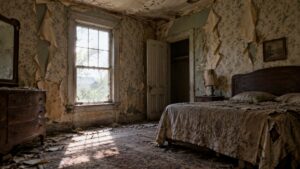
Once the roof leaks, the house starts decaying. Water rots floors and walls, and a deteriorating house can become a condemned house within a few years.
Cities board up houses to keep people out and to slow the damage.
But a board is a bandage. It doesn’t fix the building.
What Abandoned Houses Cost Their Neighbors
The Fire Problem
Abandoned buildings burn.
The National Fire Protection Association estimates about 30,200 structure fires in vacant buildings every year.
They cause roughly 60 civilian deaths, 160 civilian injuries, 3,310 firefighter injuries, and $710 million in direct property damage.
Twenty firefighters died in 17 fires in vacant or demolition-stage buildings between 2007 and 2016.
Security matters a lot here.
In NFPA data cited by Charleston, South Carolina, 57% of fires in unsecured vacant buildings were intentionally set. For secured buildings, it was 31%.
That’s also the practical reason not to wander into one.
Floors give way, roofs fall in, and entering without permission is trespassing in most cases.
If you’re doing due diligence, stick to public records and viewing from the street.
The Repair Dividend
Here’s the good news: fixing these buildings works, and Philadelphia has some of the best evidence.
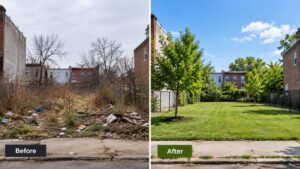
A 2016 study of 5,112 abandoned buildings and vacant lots found that fixing up abandoned buildings cut nearby firearm violence by 39%.
The city’s ordinance required owners to repair facades and install working doors and windows.
A randomized trial of 541 vacant lots found that greening them reduced shootings nearby.
A separate analysis found a 29% drop in gun violence next to greened lots.
A later trial of repaired abandoned homes found a 13% drop in gun assaults on surrounding blocks over three years.
Blocks that only got trash cleanup and weeding saw no drop.
What It Costs to Just Tear Them Down
Demolition is expensive.
One estimate put the cost of demolishing all of Baltimore’s roughly 17,000 vacant houses at $500 million and about 50 years of work.
Detroit made its numbers work with a $250 million voter-approved bond, federal blight funds, and, importantly, sales—not just demolition.
What Happens to Abandoned Houses in the USA?
It depends on who steps in.
Roughly, a house follows one of these paths:
- It sits and decays until the city cites the owner for code violations.
- The city boards it up or condemns it and sometimes bills the owner.
- Taxes go unpaid and the county forecloses or sells the property.
- A land bank takes it, clears the title, and resells it or demolishes it.
- A buyer purchases it from the owner, the bank, or the county and renovates it.
The last three paths are the ones that can end with a house back in use.
Can You Just Take Over an Abandoned House?
Myth 1: Abandoned Houses Belong to No One
They almost never do.
These houses typically belong to a person, an estate, a lender, a company, or a government.
Moving in doesn’t make you the owner, and it can bring criminal charges.
Myth 2: Adverse Possession Is a Shortcut
You may have heard that you can claim a house after seven years.
That’s adverse possession, and it’s much harder than it sounds.
It generally requires open, continuous, hostile occupation. The required time ranges from about 5 to 20 years depending on the state.
Arizona requires 10 years. Florida requires 7, with property taxes paid. Oklahoma requires 15.
Most states also expect you to pay the taxes.
You’d have to argue it in court, and you can lose.
Property lawyers generally consider it slow and unreliable compared with simply buying the property.
So if you’re asking how someone can take over a property abandoned for more than seven years, the honest answer is this: in some states, it’s possible on paper. In practice, it’s a long legal fight.
How to Legally Buy an Abandoned House
There are real, legal ways to buy abandoned American homes.
Here are the main ones.
| Route | How It Works | Main Risk | Title Quality |
| Land bank purchase | Public entity acquires tax-foreclosed property, clears liens, and resells it | Heavy rehab; buyer rules such as occupancy requirements | Usually the cleanest |
| Tax deed sale | County auctions property after delinquent taxes go unpaid, often after 2–5 years | Lingering liens; may need a quiet title action | Variable |
| Tax lien certificate | You buy the debt and earn interest; you only get the deed if the owner never redeems | Redemption periods; it isn’t a house purchase | Not applicable until foreclosure |
| Bank-owned (REO) or foreclosure auction | Buy from the lender or at auction | Competition and unseen condition | Good, with a warranty deed from the bank |
| Direct negotiation | Find the owner of record and make an offer | Owner may be deceased, unreachable, or in probate | Depends on title search |
What to Know Before You Bid
A few practical points matter before you bid on an abandoned property.
Land banks are everywhere now. One legal guide counts more than 300 nationwide. Detroit’s even sells publicly owned side lots for $100 to adjacent residents.
Tax-deed buyers should expect a title search. You may also need a quiet title action.
Financing is tricky. A non-habitable house usually won’t pass an appraisal, so plan on cash or renovation financing.
Foreclosure homes for sale are the easiest entry point. Lender-owned listings show up on standard real estate sites.
The legal route to an abandoned house runs through the owner of record, the tax collector, or the land bank.
It never runs through the front door.

How to Find Abandoned Houses Near You
You can’t open a map and find a clean list.
No reliable public list of abandoned house addresses exists, and publishing one could invite trespassing.
But you can find out what’s happening with properties in your own area using public records and local offices.
Start With Your City’s 311 or Code Enforcement Office
These offices may track vacant building notices, property violations, unsafe structures, and related complaints.
Search the County Assessor and Recorder
These records can show the owner of record and, depending on the jurisdiction, information about liens or property history.
Check the County Treasurer
Look for delinquent taxes and upcoming tax or foreclosure auction lists.
Look Up Your Local Land Bank
If your area has a land bank, check its available properties, application requirements, purchasing rules, and rehabilitation requirements.
Talk to Neighbors
Neighbors often know a house’s story better than any database.
They may know how long it has been empty, whether the owner still visits, or whether the property has been involved in a recent dispute.
Local Starting Points for Finding Abandoned Houses
The details change by place, but the basic playbook is similar.
Here’s where to begin in some of the places people search most.
| Place | Where to Start |
| Florida | County property appraiser and tax collector; remember that the 7-year rule applies only with taxes paid |
| New Jersey and New York | Municipal code enforcement and county records; New York City residents can also use 311 |
| New Orleans and Mississippi | Louisiana uses parishes rather than counties, so check parish records; in Mississippi, start with county chancery clerks |
| Minneapolis and Chicago | City vacant-building programs, plus the county recorder and treasurer |
| Baltimore and Cleveland, Ohio | City vacant-building lists, plus land bank programs |
| Texas, Iowa, Utah, Colorado, and California | County assessor, recorder, and treasurer offices; check each county’s auction process |
Editor’s Note: This table identifies where to start looking, not state or local statistics. Verify office names, procedures, and legal requirements locally before publishing or acting on this information.
A Quick Word on Photographing Abandoned Houses
Abandoned house photography is hugely popular, and for good reason.
These buildings tell stories.
But a few ground rules can keep you safe and out of trouble.
- Shoot from public property such as sidewalks and roads.
- Never enter without written permission. It can be trespassing, and the structure may be unsafe.
- Skip the exact address when you post. This helps protect the building and nearby residents.
- Respect history. Some of these were someone’s family home.
Directory: Where to Look for Data and Programs
This directory points to data and programs. It does not list individual abandoned addresses.
| Resource | What It Gives You | Catch |
| Census ACS, Table B25004 (data.census.gov) | Vacancy by reason, down to the tract level | Survey estimates, not property lists |
| Census Housing Vacancy Survey | Quarterly vacancy for the U.S., regions, states, and 75 large metros | Rates only |
| American Housing Survey | Biennial data on vacant-unit characteristics | National and select metros |
| HUD–USPS vacancy data (huduser.gov) | Addresses empty 90+ days, aggregated by tract and updated quarterly | Individual addresses are not provided; access may be limited |
Final Takeaway
An abandoned house isn’t simply an empty building.
Behind the boarded windows there is usually an owner, a tax record, a legal history, a code-enforcement file, or some combination of all four.
That’s why the easiest way to find one isn’t by walking through neighborhoods looking for a broken window.
It’s by following the records.
National vacancy statistics can tell you where the problem is concentrated. Local property records can tell you who owns a particular house. Tax records can show whether money is owed. Land banks and foreclosure programs can sometimes provide a legal path to purchase.
And if you’re thinking about buying one, remember the most important rule in this entire guide:
The legal route to an abandoned house runs through the records, not through the front door.
Frequently Asked Questions About Abandoned Houses in America
How many abandoned houses are there in America?
There is no single reliable national count of truly abandoned houses because “abandoned” is not the same as “vacant.” Census data counts millions of vacant housing units, but many are seasonal homes, homes for sale, homes for rent, or properties temporarily empty for other reasons.
Are abandoned houses free?
No. An abandoned-looking house almost always has a legal owner. It may belong to an individual, an estate, lender, company, government entity, or land bank.
Can I legally buy an abandoned house?
Yes. Depending on the property and local laws, you may be able to buy an abandoned property directly from its owner, through a land bank, tax deed auction, foreclosure sale, or other legal process.
Can I move into an abandoned house?
You should not assume that an abandoned-looking house is available for occupation. Entering or occupying someone else’s property without permission can constitute trespassing or lead to other legal problems.
How do I find out who owns an abandoned house?
Start with the local county assessor, property appraiser, recorder, or equivalent property-record office. Depending on the jurisdiction, you may also need to check tax records, code-enforcement records, and court records.
Is adverse possession a way to get an abandoned house?
In some circumstances, state law allows adverse possession, but the requirements vary considerably. It can require years of continuous possession and may involve additional requirements such as paying property taxes. It is not a simple shortcut to property ownership.
Are abandoned houses dangerous?
They can be. Vacant structures may have unstable floors, damaged roofs, exposed wiring, mold, fire hazards, or other structural problems. Never assume an abandoned-looking building is safe to enter.
Where are abandoned houses most common?
Abandoned homes occur throughout the United States, but they can be especially visible in older industrial cities, rural communities affected by population loss, former mining areas, and neighborhoods experiencing long-term disinvestment.
Can you buy an abandoned house for $1?
Almost never. Abandoned houses in America still have owners, so a house is sold for its market or auction price, not given away. A few homes have sold for 1 dollar in special cases, such as Gary, Indiana, selling eight houses for 1 dollar in 2018, and Detroit land bank auctions opening at 1,000 dollars. Our guide to buying an abandoned house for $1 explains what is real and what is not.
Research & Source Notes
The article’s supplied research references the following source groups:
- U.S. Census Bureau housing and vacancy data
- USAFacts analysis of Census data
- LendingTree analysis of the 2024 American Community Survey
- ATTOM Data foreclosure information
- Federal Reserve research on long-term vacancy
- National Fire Protection Association data on vacant-building fires
- City of Detroit land-bank and demolition information
- Baltimore city and Baltimore-area reporting
- Baltimore Heritage materials
- Baltimore Vacants Reinvestment Council information
- Philadelphia studies examining abandoned-property rehabilitation, vacant lots, greening, and neighborhood violence

AbandonedHouse
We explore the history, architecture and context behind America’s overlooked places through research-led storytelling and responsible documentation.
More stories for curious minds
Pros and Cons of Buying an Abandoned House
A run-down house with a low price can look like a steal, and the pros and cons of…
How to Buy an Abandoned House: Step-by-Step (US)
How to buy an abandoned house: find a property, identify the owner through county assessor and tax records,…