
Research & field stories
Who owns an abandoned house? The owner on record still owns it, even if the house sits empty for years. An abandoned house is a home its owner has left empty and neglected, often behind on taxes and upkeep, while still holding legal title. That owner may be a person, an heir, a bank, a company, or the local government.
You pass a run-down house every day. The grass is tall, the windows are boarded, and mail is piling up. So who owns an abandoned house like that?
The short answer is that someone almost always does. In the U.S., property rights are strong, so an owner who walks away usually stays the legal owner until the house is sold, foreclosed on, or taken by the government. This guide shows you how to find the owner of an abandoned property, step by step, using simple public records.
Who Owns an Abandoned House? The Short Answer
An abandoned house is rarely “ownerless.” The name on the records can belong to different kinds of owners:
- The original owner who stopped paying and moved away
- A bank or lender after a foreclosure
- Heirs of an owner who died
- A company, such as an LLC or an investor
- A trust, run by a trustee
- The city, county, or a land bank, after unpaid taxes
The Center for Community Progress explains that even if owners stop paying taxes and let a home fall apart, they are still its rightful owners, up to a point. Cities can step in when a house becomes unsafe or when taxes go unpaid for too long.
Why Is It Hard to Find the Owner of an Abandoned House?
People leave homes for many reasons, from job loss to death in the family. Each reason leaves a different paper trail. You can read more about why houses get abandoned and how many abandoned houses there are in the US.
Ownership gets confusing when records are old, a company hides behind another company, or no one finished the paperwork after an owner died. That is why a simple name search sometimes leads nowhere. That is why working out who owns an abandoned house can take more than one search.
How Do You Know If a House Is Really Abandoned?
A house that looks empty may just be vacant. A vacant house still has an owner who pays taxes and may plan to return. The page on abandoned vs. vacant vs. zombie vs. condemned property explains the differences.
Look for clear signs a house is really abandoned, such as long-term neglect and years of unpaid bills. Stay on the sidewalk. Never enter the property, and don’t move anything. Take notes and photos from the street only.
How to Find the Owner of an Abandoned Property, Step by Step
Owner records are public, though the cost and ease of getting them vary by county. You need just the address and a little patience.
Step 1: Get the Address and Parcel Number
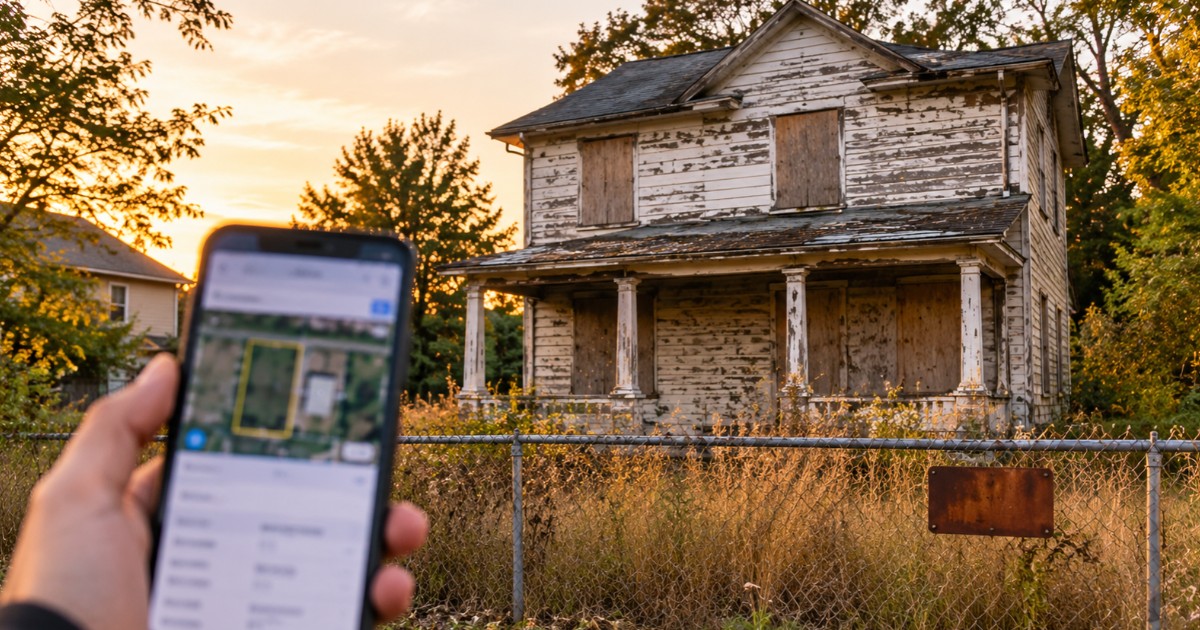
Start with the street address. If you don’t have one, use the house numbers next to it. Many counties have an online map where you can click a lot and see its parcel number.
That map is the quickest way to answer “who owns this house by address.” Write down the parcel number, since it makes every other search easier.
Step 2: Use the County Assessor Owner Search
The county assessor’s office keeps tax records. A county assessor owner search often shows the owner’s name and mailing address. Some counties charge a small fee, but it is usually worth it.
Pay attention to the mailing address. If it doesn’t match the property address, the owner probably lives somewhere else. The name can also be a clue: words like “LLC,” “Corp.,” or “Company” point to a business owner.
Step 3: Run a County Recorder Deed Search
The recorder’s office, sometimes called the register of deeds, holds the official ownership records. A county recorder deed search shows the latest deed, the document that transfers ownership and names who has legal title. It can also show mortgages and liens, which are legal claims for unpaid debts.
Search by address, parcel number, or the owner’s name. Many counties offer this online. If they don’t, call or visit the office. A deed search is the most direct way to confirm who owns an abandoned house before you act on the name.
Step 4: Check Property Tax Records
The county treasurer or tax collector tracks who has paid taxes. The Center for Community Progress notes that unpaid property taxes are one of the strongest warning signs of an abandoned property. Years of missed payments mean the house may be headed for a tax sale or a government takeover.
Step 5: Ask Code Enforcement
If the house is a safety problem, call your city or county code enforcement office. Code enforcement officers will try to find the owner of a property with violations, one officer told The Columbian. Some places also have a vacant property registry that owners must join.
This is often the best way to find the owner of a vacant house when the public records are a dead end. The city has legal tools that you don’t.
Step 6: Consider a Title Report or Skip Tracing
A title company can sell you a title report. It lists everyone with a stake in the property, including owners and lenders. Skip tracing is another method, where an investigator pieces together a current address from other data.
These options cost money, so try the free steps first.
Can Neighbors Tell You Who Owns an Abandoned House?
Asking neighbors is a simple way to learn who owns an abandoned house when the public records are thin. People who live nearby often know the owner’s name, when the house was last lived in, and whether family still visits. They may also know about a death, a move, or a foreclosure on the street. Take notes, thank them for their time, and check anything you hear against the county records before you rely on it.
Special Cases: When the Owner Isn’t a Regular Person
The records sometimes lead to a name that is not a person. These are the most common cases. In each case below, the question of who owns an abandoned house has a different answer.
Abandoned House Owned by an LLC
Investors often hold property through limited liability companies. If you find an abandoned house owned by an LLC, search the business in the Secretary of State’s database for the state where it was formed. Most of these searches are free.
The record usually shows a registered agent, who accepts legal papers for the company.
One LLC can be owned by another LLC, which can make it very hard to reach the real person behind the company.
Who Owns a House in a Trust
If you wonder who owns a house in a trust, look at the deed. It often names a trustee, such as “Jane Smith, Trustee of the Smith Family Trust.” The trustee manages the home for the people the trust was made to benefit.
Trust papers are usually private. Still, the trustee’s name and mailing address on the deed or tax record give you someone to contact.
Abandoned House Owner Deceased
When an owner dies, the house passes to a will’s beneficiaries or to heirs under state law. But public records often don’t change on their own. If the family never went through probate (the court process that settles a dead person’s estate), the dead owner’s name can stay on the deed for years.
Things get messier when there are many heirs, or when heirs have died too. This is called heirs’ property, and sorting it out can take a lawyer and a lot of time. If you suspect this, check the probate court records in the county where the owner lived. If the house is in a different county, check there too.
Foreclosed Abandoned House Owner
If the owner stopped paying the mortgage, the lender may have started a foreclosure. During the process, the borrower is usually still the owner. After the sale, the bank or a new buyer takes title.
Check the county court for foreclosure filings and the recorder for a new deed. Banks often hire a property management company to look after the house, so a notice posted on the door may help. It can take time to learn which bank is responsible.
Tax-Delinquent Houses and Government Owners
Sometimes no one steps up until the government does. After enough unpaid taxes, a county can sell the property or foreclose on it. Properties that don’t sell at a tax auction can end up with a land bank, which a HUD USER report describes as a government or nonprofit group that acquires and manages foreclosed or abandoned properties.
Learn more about what happens to abandoned houses nobody claims.
What to Do If You Still Can’t Find the Owner
These cases can take a long time, so keep at it. Good next moves:
- Keep copies of every letter, email, and phone call.
- Team up with neighbors so the report carries more weight.
- Report safety problems to code enforcement and the health department.
- Talk to a real estate attorney if you want to buy or claim the property.
Some people ask about taking over a home through squatting. That is risky and rarely simple. Rules on adverse possession by state differ, and they usually demand years of open use and other strict conditions.
Can You Buy an Abandoned House Once You Find the Owner?
Finding the owner is the first step to buying. Once you have a name or an address, you can send a letter or call to ask if they would sell. Knowing who owns an abandoned house also tells you who can legally sell it to you.
You can also browse abandoned houses for sale that are already listed. Financing can be tricky for run-down homes, so read about getting a mortgage for an abandoned house before you make an offer.
If you end up owning one, the vacant house maintenance checklist helps you protect it while you plan repairs.
Frequently Asked Questions
Who owns an abandoned house if the owner never comes back?
The owner on record still owns it. That could be the person who left, their heirs, a lender, or a company. The government only takes over after steps like tax foreclosure or court action.
Can I find who owns this house by address for free?
Often, yes. Many county assessor and recorder websites let you search by address at no cost. Some charge small fees for copies of documents.
Can I buy an abandoned house without finding the owner?
No. You can’t buy a home from someone who doesn’t own it. You either deal with the owner, or you buy it later at a tax sale or from a bank or land bank.
Is the bank the owner of a foreclosed abandoned house?
Not always. The bank only becomes the owner after the foreclosure is finished and the deed is recorded in its name. Before that, the borrower is usually still the owner.
How long can a house stay abandoned before the government takes it?
There is no single timeline. It depends on state and local law and on how far behind the taxes are. Ask the county treasurer or the code enforcement office how it works where the house sits.
Can I contact the owner of an abandoned house?
Yes. Once you have the owner’s name and mailing address from the assessor or tax records, you can write a polite letter stating who you are, why you are writing, and how to reach you. Keep a copy of the letter. If the address is a PO box or a company agent, that is still a valid way to reach them.
Is it legal to enter an abandoned house to find the owner?
No. Entering an abandoned house without the owner’s permission can be trespassing, even if the house looks empty and no one has lived there for years. Stay on public property, such as the sidewalk or the street, and use county records, code enforcement, and neighbors to find the owner instead.
Conclusion
Almost every abandoned house still has an owner: a person, a company, a lender, a family estate, or the government. Start with the county assessor and recorder, then check tax records, business filings, and probate court if needed. In short, who owns an abandoned house is a public-record question, and the answer is usually only a few searches away.
This article is general information, not legal advice. Talk to a local attorney before you take any legal step.

AbandonedHouse
We explore the history, architecture and context behind America’s overlooked places through research-led storytelling and responsible documentation.
More stories for curious minds
Pros and Cons of Buying an Abandoned House
A run-down house with a low price can look like a steal, and the pros and cons of…
How to Buy an Abandoned House: Step-by-Step (US)
How to buy an abandoned house: find a property, identify the owner through county assessor and tax records,…