

Research & field stories
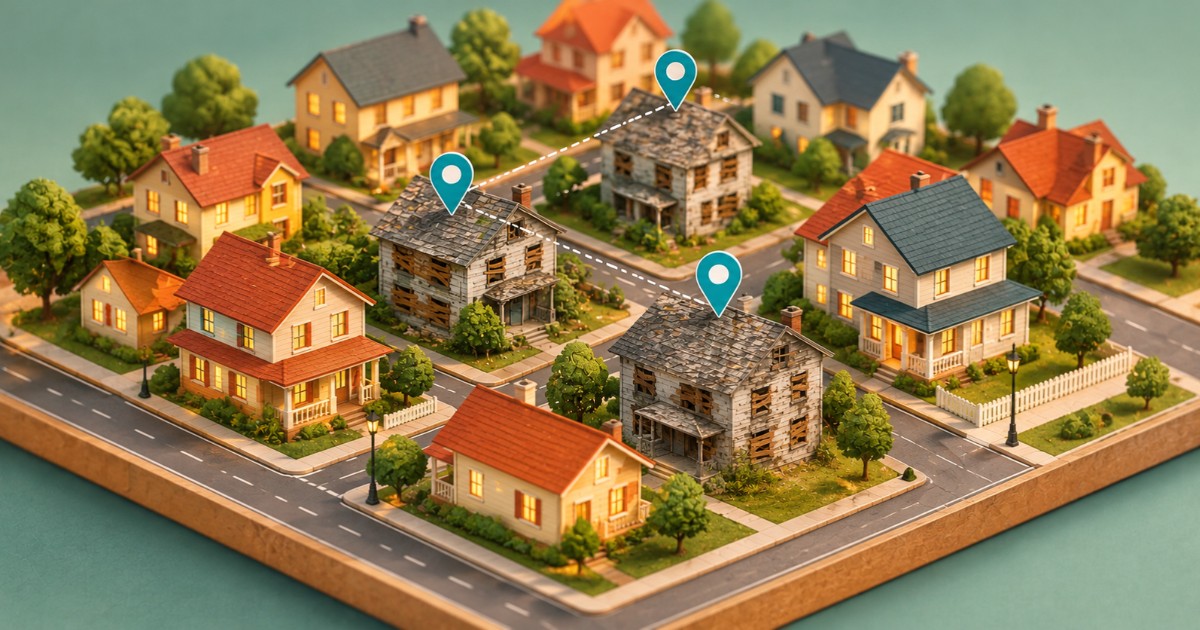
How to find abandoned houses? Check code enforcement and 311 records, search the county assessor and tax records, look for a vacant property registry, and check land bank and city property portals. Then confirm the owner of record and look at the house from a public street. Never enter a house without the owner’s permission.
If you want to know how to find abandoned houses in your area, start with public records. Do not start with a drive down a dark street. City and county offices already track many vacant homes, and much of that data is free to search.
No single list covers every house. Each source shows a different clue. This guide covers five ways to find vacant properties and what each one can and cannot tell you.
You can use these steps to find vacant homes for a class project, a neighborhood cleanup or a first real estate deal. A record shows that a house looks vacant. It does not prove the owner gave it up. This is general information, not legal advice, and local rules differ. Links and rules were last checked on November 16, 2026.
Quick Answer: Is There a Vacant House List?
Not one for the whole country. The Center for Community Progress, a nonprofit that works on vacant property, says no single national dataset tracks vacant and abandoned homes by itself. You can still learn a lot from local sources, and this guide from Community Progress lists many of them.
The short answer on how to find abandoned houses is to combine several public sources. Here is the plan most people follow:
- Check code enforcement and 311 records.
- Look for a vacant property registry.
- Search assessor and tax records.
- Check land bank and city property portals.
- Look at the house from a public street.
- Verify ownership and status before you act.
One clue means little. Two or three matching clues mean more.
Vacant vs. Abandoned: Why the Words Matter
A vacant house is empty. Nobody lives there right now. An abandoned house is one the owner has given up on, and that often shows up as unpaid taxes and no upkeep.
Many vacant houses are not abandoned. The owner may be selling, fixing the place up or waiting on an estate. Condemned and zombie properties are different again. Our guide to vacant versus abandoned explains each term.
A house that looks abandoned may still have a caring owner. Treat every find as vacant or possibly abandoned until records say more.
Method 1: Code Enforcement and 311 Records
Code enforcement offices inspect homes and write citations for problems like broken windows and tall weeds. Community Progress says repeat citations that nobody fixes can point to an empty house.
311 is a city phone line and website where residents report problems, including empty buildings. Some cities publish those reports as open data. Search your city name with “open data portal” and “vacant building.”
Worked Example: Chicago
Chicago’s Department of Buildings runs a public search for vacant buildings with code violations. Think of it as a vacant house lookup by address, police district, neighborhood or ward. You do not need an account to search.
Residents can also report a vacant or abandoned building by calling 311. An inspector then visits to confirm whether the building is vacant, dangerous or both.
What This Method Misses
Only houses that someone reported or an inspector cited show up. A vacant house with no complaints stays off the list. Another city may share less than Chicago does, so check your own city’s pages.
Method 2: Vacant Property Registries
Some local governments make owners of vacant homes sign up with the city or county. These rules are called vacant property registration ordinances. Where they exist, the registry can show details such as whether the owner lives out of state.
Chicago keeps vacant building registration information at its Department of Buildings. The city says you can request that information through a Freedom of Information Act (FOIA) request. A FOIA request is a written request for public records.
Manatee County, Florida, gives a county-level example. Its code enforcement office requires owners of real property in foreclosure, in the unincorporated areas, to register it with the county. The county’s registration page explains the rule, so check there to see what the public can view.
A registry lists only homes that someone registered. Search “your city name + vacant property registry” to see if one exists. If you find none, move on to the next method.
Method 3: Tax and Assessor Records
The county assessor keeps a record for each parcel of land. It usually shows the owner, the owner’s mailing address, the property type and recent sales. A mailing address in another state or an LLC name can point to an owner who lives far away.
Start with our list of county assessor websites if your state is covered. If it is not, search your county name plus “assessor property search.”
Unpaid property taxes are a strong clue. Community Progress calls tax delinquency the data point most likely to flag a problem property. Years of unpaid taxes can suggest that nobody is caring for the house.
Some counties post lists of unpaid accounts on the treasurer’s website. Learn how tax delinquent properties work before you rely on one.
Assessor and tax records show paper facts. They cannot tell you whether anyone lives in the house today.
Method 4: Land Bank and City Property Portals
A land bank is a public or nonprofit group that takes over vacant and tax-foreclosed properties. Some cities team up with their land bank to share property data online.
Flint, Michigan, is a good example. The city and the Genesee County Land Bank launched the Flint Property Portal in 2017. The city’s portal user guide says it holds a profile for every property in Flint, with details such as who owns it.
Not every city has a portal like this. Search your city or county name plus “land bank” or “property portal” to check.
What You Cannot Get: USPS and Utility Data
Mail carriers know which addresses stop getting mail. The U.S. Postal Service tracks addresses that have been vacant for more than 90 days.
That data does not reach most people. The Department of Housing and Urban Development (HUD) gets it from USPS and groups it by census tract, which is a neighborhood-sized area. HUD shares it only with registered users at government agencies and nonprofits, and USPS does not give HUD a list of addresses.
Be careful with any site that sells a “USPS vacant list.” Companies do license address-level data. Labeling also differs from one post office to the next, so the data can mislead. Check any paid list against public records first.
Utility records are another clue that most people cannot see. Water or power shut off, or very low use for six months or more, often points to an empty house. The utility holds those records, and city staff may use them.
Method 5: Look From the Public Street
Records give you leads. A short walk or drive adds context. City staff call a drive-by check a windshield survey, and you can do a simple version.
Stay on the sidewalk or street and look in daylight. Note clues like these:
- Boarded or broken windows
- Tall grass, dead plants or piled trash
- Mail, flyers or packages stacking up
- Notices taped to the door or windows
- Peeling paint, a sagging porch or a damaged roof
- No signs of daily life, such as cars, lights or open curtains
A tall lawn can mean a busy owner. Look for several signs at once. Our guide to the signs a house is really abandoned explains what each clue can and cannot mean.
How to Find Abandoned Houses Near You: Probate, Foreclosure and Neighbors
Some houses become vacant after an owner dies or a loan is not paid. Probate court records can show an estate with a house and no one living in it. Sheriff and foreclosure filings can show a house that may be sold at auction. Ask the county clerk or court office which records are public and where to search them.
Neighbors can also help, from public ground. Ask a neighbor whether anyone has lived in a house lately, or whether mail and upkeep have stopped. Do not ask anyone to enter the house, and do not share its address online.
Online listings can add leads, too. Search listing sites for phrases such as ‘needs work’, ‘as-is’ or ‘estate sale’, then check the same address in the assessor and tax records. A listing is a lead, not proof that a house is abandoned. You cannot claim an abandoned house simply by finding it.
Which Source Shows What
| Source | What it can show | What it cannot show | Who can use it |
|---|---|---|---|
| Code enforcement and 311 | Houses that were reported or cited | Quiet vacant houses | Public in many cities, but it varies |
| Vacant property registry | Registered vacant homes and owner details | Homes nobody registered | Varies by city or county |
| Assessor and tax records | Owner, mailing address, unpaid taxes | Whether anyone lives there now | Often public online |
| Land bank or city portal | Property profiles, ownership, condition | Cities without a portal | Public where offered |
| USPS vacancy data | Vacancy counts by census tract | Individual addresses | Registered government and nonprofit users |
| Street check | Visible condition | Ownership or legal status | Anyone, from public property |
Verify Before You Take Any Step
Compare what you saw with what the records say. A house with code citations, unpaid taxes and a far-away owner is a stronger lead than a house with only a messy yard.
Run through these checks:
- Find the parcel number and owner of record on the assessor site.
- Check tax status and code violation records.
- Look at the house again on another day.
- Compare the owner’s mailing address with the property address.
Then look into ownership. Our guide on how to find the owner of a property shows where to look.
Even after these checks, you only know that a house is likely vacant. Legal abandonment is a legal question, and the answer depends on state law and the facts.
Safety, Legal and Ethical Rules
Do This
- Stay on public sidewalks and streets.
- Respect fences and posted notices.
- Keep your notes private, including addresses.
- Report danger to the city.
Do Not Do This
- Enter a house, even if a door or window is open.
- Take anything, including scrap, fixtures or mail.
- Approach or question people who may live there.
- Post the address of a specific house online. The house may have someone living in it, and posts can draw trespassers.
Old houses can have weak floors, mold and broken glass. A quick look inside can lead to an injury or a trespassing charge. Laws vary by state, so check yours.
What to Do After You Find One
If the House Looks Dangerous
Report it. In Chicago, you call 311 for a vacant or abandoned building. In other places, contact your city’s 311 line or code enforcement office. Call 911 for an emergency, such as a fire or a person in danger.
If You Want to Buy It
You cannot buy a house from the street. The owner of record has to sell it, or a public group has to hold it. Our page on abandoned houses for sale near you gives local search ideas.
Land banks and tax sales are other routes, and each has its own steps and risks.
Our guide to ways to buy a low-cost house lists them.
Repairs can cost more than the price. Read about rehab loans for abandoned houses before you plan your budget.
If you end up owning an empty house, caring for a vacant house helps you keep it safe and avoid trouble with the city.
FAQ
Is it legal to look for abandoned houses?
Looking at a house from a public street is generally fine. Going onto the property without permission can count as trespassing. State laws differ, so check yours.
How do I find vacant houses for free if my city has no registry?
Start with the county assessor site and tax records, which are free to search in many places. Then check your city’s open data portal and 311 reports. You can also ask the code enforcement office what public records it keeps.
Who checks on empty houses?
Code enforcement usually inspects after someone reports a problem. Some fire departments also track vacant buildings, because empty houses can be risky for crews. Owners are responsible for keeping their property safe.
How do I report a dangerous vacant house?
Call your city’s 311 line or your code enforcement office. Give the address and describe what you see from the street, like open doors or broken windows. Call 911 if someone is in danger.
Can I buy a vacant house I find?
Only if the owner agrees to sell, or if a public group such as a land bank or county sells it. Find the owner of record first. Then ask about the price and any back taxes.
Can I claim an abandoned house if I find one?
No. Learning how to find abandoned houses does not give you a claim to one. Ownership changes only when the owner sells it, a court orders a sale, or another legal process transfers it.
How do I find abandoned houses near me?
Start with the free public records in your area: code enforcement and 311 reports, the county assessor site and tax records, and any vacant property registry or land bank portal. Then look at the house from a public street.
Conclusion
Now you know how to find abandoned houses the careful way. Start with code enforcement, registries, tax records and land bank portals. Add a safe look from the street, then verify what you found.
These steps give you leads, not proof. Stay on public ground, keep addresses private and report real danger to your city. If a house looks occupied, treat it as occupied.

AbandonedHouse
We explore the history, architecture and context behind America’s overlooked places through research-led storytelling and responsible documentation.
More stories for curious minds
Pros and Cons of Buying an Abandoned House
A run-down house with a low price can look like a steal, and the pros and cons of…
How to Buy an Abandoned House: Step-by-Step (US)
How to buy an abandoned house: find a property, identify the owner through county assessor and tax records,…