
Research & field stories
To find abandoned houses for sale near you, search listing sites by ZIP code, city, or county, then widen the search to fixer-uppers and foreclosures. Add official government sales and local land banks, and check each candidate against the current listing, public records, and the sale terms.
Abandoned houses for sale near me are houses that look neglected or unoccupied and are actually offered for sale by someone with authority to sell them; a rundown look alone proves neither abandonment nor availability.
No single site or category will show every house that fits. A neglected look says nothing about who owns the house or whether anyone is selling it.
Nothing here is a live inventory, and listing details can change after you view them. For a wider look at buying routes, see our guide to abandoned houses for sale.
Quick Answers
- Where do I start? Search listing sites by ZIP code, city, or county, and widen the area if results are thin.
- Which categories should I search? Run separate searches for abandoned-property leads, fixer-uppers, foreclosures, and official sales. They overlap only partly.
- Are there official routes? Federal agency pages, county tax sales, and local land-bank or city housing programs are separate routes. Availability depends on your location.
- Does a rundown look mean a house is for sale? No. Appearance doesn’t show abandonment, ownership, or availability.
- What should I verify? Confirm the property through county records, find out who has authority to sell, and read the sale terms. Write down the date you checked.
- Will these houses cost less? This guide has no evidence that they do. Compare the full project cost for each property.
How to Find Abandoned Houses for Sale Near Me
The search works best as a sequence: set an area, run several category searches, and recheck what you find. Each step below builds on the one before it.
Start With Your ZIP Code, City, or County
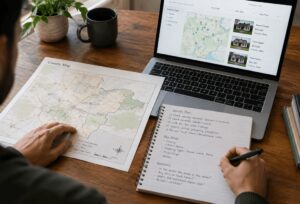
Pick one search area and write it down. Listing sites generally offer location searches, but confirm which options the site you use provides.
If results are thin, widen the area in steps, from your city to neighboring towns and then adjoining counties. Keep notes on each area so you can repeat the search later.
No list covers every house in an area. For why even national counts are hard to pin down, see how many abandoned houses there are in the US.
Search More Than One Property Category
Search for abandoned properties alongside fixer-upper, foreclosure, and distressed-property categories. These labels overlap only partly, so a house in one may not appear in another.
Run each category as its own search and keep the results separate.
Save Searches and Review New Listings
If your chosen site offers saved searches or email alerts, set one up for each category and area. Check the site’s current help pages first, since features differ by platform.
An alert only points you to a listing. Open the original page and confirm the status before you act on it.
Where to Search for Abandoned Houses
The routes below differ in who runs them, what they list, and what you still need to verify. This is a comparison of search routes, not a ranking.
| Search route | What to look for | What to verify |
|---|---|---|
| Mainstream listings | Relevant location and property categories | Current listing status and seller |
| Foreclosure and distressed listings | Applicable sale or property labels | Exact status and whether the property can be bought |
| Government sales | Agency or official public-sale notices | Current sale terms and the responsible agency |
| Local land banks and city programs | Municipal or land-bank inventory, where it exists | Eligibility, property status, and local rules |
| Public records | Property identity and recorded information | Whether further verification is needed |
Mainstream Real Estate Listing Websites
Zillow, Realtor.com, Redfin, and Trulia are established listing platforms you can begin with. Each exposes different filters and categories, so explore what your chosen site actually offers.
This is a starting list. It is neither a ranking nor an endorsement.
Foreclosure and Distressed-Property Listings
Several of these platforms carry foreclosure or fixer-upper category pages. Examples include Zillow’s foreclosure page, a Realtor.com foreclosure search for Monterey County, California, a Redfin fixer-upper page for Monterey County, and Trulia’s foreclosure listings. What they show depends on location and on the date you search.
A foreclosure label ties a property to a foreclosure process. It does not tell you the house is for sale today, so read the listing’s own status and confirm it with the seller or agent.
Government and Public-Sale Resources
Government agencies sell real estate through their own channels, apart from commercial listing sites. USA.gov’s real estate sales page is a place to start when you need to find the responsible agency, and HUD’s homes for sale page and the USDA property resales site are two federal routes worth checking.
A county tax auction is a different route again, with its own rules. Monterey County, California, publishes property tax auction information as one example of how a county presents its process, and your county’s schedule and rules will differ.
Not every agency sells homes, and none of these pages should be assumed to hold houses near you.
Local Land Banks and Municipal Programs
Some cities and counties run land banks or housing programs that sell properties they hold. Building Detroit and the Kansas City, Missouri, homesteading page are local examples.
Don’t assume your area has an equivalent. Check your city or county’s official website and ask the local housing department what programs exist.
Understand the Difference Between Abandoned, Vacant, Foreclosed, and Distressed Properties
Listing labels and everyday words describe different things. The definitions below are plain-language working definitions, not legal ones, and legal meanings vary by state and locality. Our guide to abandoned vs. vacant vs. zombie vs. condemned property goes deeper on the distinctions.
Abandoned or Apparently Abandoned Houses
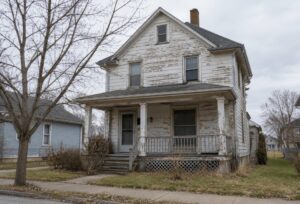
Apparently abandoned describes what you see: a house that looks neglected or unoccupied. It says nothing about the owner’s intentions or the house’s legal status.
If you want to judge a house you’ve spotted, start with the signs a house is really abandoned.
Vacant Properties
Vacant means unoccupied. A vacant house may be on the market or off it, so vacancy alone doesn’t show abandonment or availability.
Foreclosures and Pre-Foreclosures
A foreclosure label means the property is connected to a foreclosure process. The stages and rules vary by state, so the label doesn’t show the exact stage or whether you can buy now.
Pre-foreclosure refers to the period before a foreclosure sale or completion. It doesn’t prove the property is actively offered for sale.
Fixer-Uppers and Distressed Properties
A fixer-upper is a property marketed or understood as needing work. Distressed is a broader label.
Neither tells you who owns the property, what repairs will cost, or whether the price is below market.
| Term | General meaning | What the label alone does not establish |
|---|---|---|
| Apparently abandoned | Appears neglected or unoccupied | Legal status, owner’s intentions, sale availability |
| Vacant | Unoccupied | Abandonment or availability for sale |
| Foreclosure | Connected to a foreclosure process | Exact stage, or whether you can buy now |
| Pre-foreclosure | A label for the period before a foreclosure sale or completion | That the property is actively offered for sale |
| Fixer-upper | Marketed or understood as needing work | Actual repair costs or a bargain price |
| Tax-sale property | Connected to a tax-related sale process | The local procedure, title outcome, or buyer obligations |
How to Search More Effectively in Your Area
These habits keep a search organized as listings and sale pages change.
Expand Your Search Area Gradually
Test your ZIP code first, then your city, your county, and nearby areas, one at a time. Record the filters you used so you can repeat or compare each search.
Compare Search Categories Separately
Keep separate searches for abandoned-property leads, fixer-uppers, foreclosures, and official sales. Merging them into one list implies they mean the same thing, and they don’t.
Check Listing Dates and Availability
Open the original listing or official sale page and note the date you viewed it. If a property appears on an aggregator, ask the seller, agent, agency, or auction administrator whether it’s still available.
Listing data can be stale, duplicated, or incomplete. Appearing in search results doesn’t show that a property remains for sale.
Keep a Shortlist of Candidate Properties
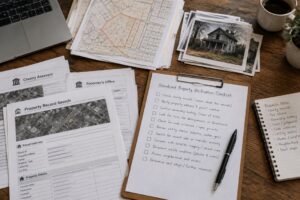
For each candidate, record the address or parcel identifier, the source page, the listing status, the sale method, the date checked, and your open questions. The checklist in the next section lists these fields.
How to Verify an Abandoned House Before Trying to Buy It
A promising address starts the research. The steps below take you from identifying the property to confirming who can sell it.
Confirm Ownership and the Property’s Identity
Start with the county assessor, the recorder, or the equivalent public-record office. These offices can help you identify the parcel and look into recorded ownership, though the exact office and available records depend on your location.
A county website alone doesn’t prove a house is abandoned or that its title is clear. For how unclaimed properties are often handled, see what happens to abandoned houses nobody claims.
Confirm Who Has Authority to Sell
Work out who is offering the property and whether they have the authority to sell it. A visible vacancy or an online post doesn’t prove that. For an official sale, look for the responsible party on the sale page itself.
Investigate Taxes, Liens, Title, and Other Recorded Issues
Treat taxes, liens, and recorded documents as questions to investigate. A title professional or real estate attorney can tell you what the records mean for your purchase, and no single record settles every title or liability question.
Check Occupancy, Access, and Inspection Conditions
Arrange access through the owner, agent, or sale administrator. Don’t enter, occupy, or disturb a property without authorization, because doing so can create legal problems and the building may be unsafe.
Ask whether inspections are permitted before you bid or make an offer.
| Field | What to record |
|---|---|
| Property identity | Address and parcel identifier, if available |
| Source | Original listing or official sale page |
| Status | Status shown and the date checked |
| Seller or administrator | Responsible party and evidence of authority |
| Public records | Ownership, tax, and recorded-document checks |
| Sale conditions | Method, deadlines, deposits, and inspection limits |
| Open questions | Unresolved issues for a professional or the relevant authority |
What to Check Before Buying Through an Auction or Public Sale
An advertised property and a completed purchase are separate stages. Each public sale sets its own conditions.
Read the Official Sale Terms
Confirm the sale administrator, bidding method, deposit, deadlines, permitted inspections, and buyer obligations in the current rules for that sale. These details differ from sale to sale, so don’t assume a sale is cash-only or that inspections are allowed. Read the terms.
Check Applicable Tax-Sale or Foreclosure Procedures
Rules on redemption, title transfer, and notices come from state and local law, and they vary by place. Read your county’s or state’s official guidance, and talk to an attorney before you bid.
Estimate the Full Project Cost
Budget for the purchase price, professional inspections where permitted, repairs, transaction costs, and any other expenses specific to the property. Get written estimates, because no figure in this guide can stand in for yours.
What Are the Pros and Cons of Buying an Abandoned House?
A neglected house can look like a bargain, but the asking price is only one part of the decision.
Possible advantages: there may be less competition for a hard-to-finance property, and renovation can shape the home to your needs.
Possible risks: hidden repair costs, unpaid taxes or liens, unclear title, difficulty getting a mortgage, and limits on inspections.
Common Mistakes to Avoid When Searching for Abandoned Houses
Assuming an Empty House Is for Sale
An empty or run-down house is a lead. Houses end up neglected for many reasons, covered in our guide to why houses get abandoned, and none of them makes the house available to you.
Trusting Old Listings or Unverified Social Posts
Confirm availability through the original listing, the responsible seller, or the official sale administrator. A screenshot or a repost can be out of date.
Treating Advertised Discounts as Verified Savings
Labels such as “below market value” are marketing language. They don’t establish a property’s independent value or your total cost.
Ignoring Local Rules and Sale Conditions
Verify the process that applies to the exact property and location. A rule you read about for another county may not apply.
Start Your Search With a Clear Location and a Verification Plan
Define your location, search several relevant categories, and check official and local resources. Record each candidate, then confirm its sale status and terms before you commit money.
No search guarantees a result, and this guide doesn’t maintain a live listing database. For wider context on the topic, see our overview of abandoned houses in America.
Frequently Asked Questions
How do I find abandoned houses for sale near me?
Search listing sites by ZIP code, city, or county, then check fixer-upper and foreclosure categories, official public-sale pages, and local land-bank or city programs. Confirm each candidate’s current sale status before you act.
Where can I search for abandoned houses online?
Begin with established listing sites, then move to distressed-property categories and official government or local-program pages. The sites named in this guide are starting points, not a complete directory.
Are abandoned houses listed as foreclosures?
Not necessarily. Abandonment and foreclosure describe different things, and a foreclosure label points to a specific process. Check the exact property and the terms your area uses.
Can I buy an abandoned house that is not listed for sale?
Possibly, but nothing guarantees it. Identify the property and its owner through public records, then find out whether the owner or an authorized party is willing and legally able to sell.
Are abandoned houses cheaper than other homes?
This guide has no evidence that they are. Asking price, condition, repairs, and transaction costs vary by property, and “below market value” in an ad isn’t independent proof of a discount.
How do I check who owns an abandoned property?
Start with the county assessor, recorder, or the local public-record office. Records have limits, so seek qualified help if ownership, authority to sell, or title stays unclear.
Can I buy an abandoned house at a government or tax sale?
Potentially, if a property is actually offered through a sale open to you. Check that sale’s listing, eligibility rules, bidding process, deadlines, and buyer obligations for your jurisdiction.
What should I check before buying a distressed property?
Verify the property and the seller or sale administrator, look into recorded ownership issues, and read the current sale terms. Then assess inspection access and the total project cost.
Can I get a mortgage for an abandoned house?
Sometimes. Whether a lender will finance the house depends on its condition, the ownership picture, and the lender’s rules, not on the word abandoned alone. A home that is uninhabitable or needs major repairs is harder to finance, so ask a lender about renovation loans or cash requirements before you make an offer. Our guide to getting a mortgage for an abandoned house explains what lenders look at.
Can I get an abandoned house for free?
No. Even a $1 price is not a free house: the buyer still faces closing costs, taxes, repairs, and any conditions tied to the sale. Some city programs have sold houses for $1 with repair and occupancy conditions, so read the specific program’s terms before counting on a low price. Our guide to buying an abandoned house for $1 explains what is real.

AbandonedHouse
We explore the history, architecture and context behind America’s overlooked places through research-led storytelling and responsible documentation.
More stories for curious minds
Tax Lien vs Tax Deed States: Full List by State (2027)
Every state has a way to collect unpaid property taxes. Some sell a claim on the house. Others…
Housing Vacancy Rates by State in 2027: Highest and Lowest.
Housing vacancy rates by state range from 6.5% in Connecticut to 19.5% in Maine, according to the 2025…