

Research & field stories
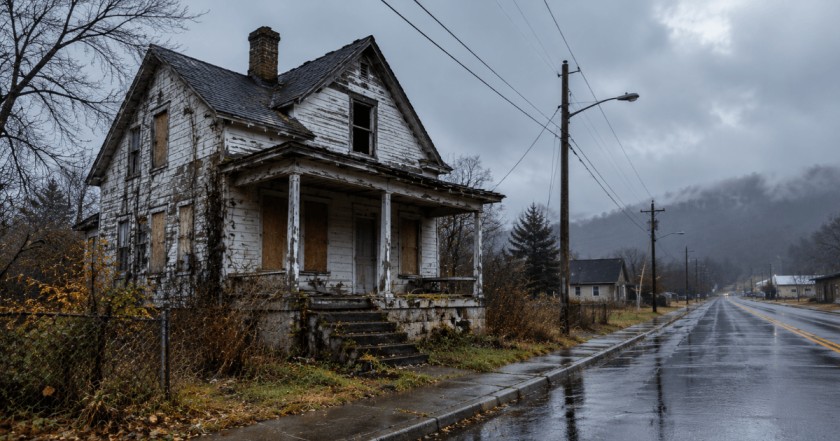
Abandoned house pictures are photographs of houses that appear empty, neglected, or no longer lived in, showing peeling paint, boarded windows, overgrown yards, and empty rooms. They come from official archives, historical collections, photographer portfolios, and licensed image libraries, and each image needs a rights check before reuse.
Abandoned house pictures turn up in four places: official photo archives, historical collections, photographer portfolios, and licensed image libraries. Whichever you use, find out who made the image, when and where, and what the rights say before you reuse it.
A photo can show peeling paint, a boarded window, or a sagging porch. It can’t tell you whether the home is legally abandoned, who owns it, or whether it’s for sale.
Every picture carries a credit record with its creator, date, original title, and rights advisory. Captions describe what the image shows and nothing else.
Article Quick Answers
- Abandoned house pictures live in official photo archives, historical collections, photographer portfolios, and licensed image libraries.
- Before you reuse an image, confirm the creator, date, location, and rights.
- A photo shows visible condition. It can’t prove legal abandonment, ownership, foreclosure, condemnation, or sale status.
- Vacant and abandoned mean different things. Census vacancy figures include seasonal, occasional, and recreational homes.
- “No known restrictions” on a Library of Congress record is an advisory. It doesn’t clear every use.
- Viewing or downloading an image gives you no right to republish it.
Abandoned House Exterior Pictures
Exterior shots tell the story fastest: faded siding, boarded windows, worn porches, yards gone to weeds. Write captions that describe what you see.
When an archive calls a house “abandoned,” that is the archive’s wording, not a legal finding.
Listing: Mineral County, West Virginia
- Source: Library of Congress photo record
- Creator: Carol M. Highsmith, photographer
- Date: May 1, 2015
- Original title: A once-fine, now abandoned, house in Mineral County, West Virginia, near Keyser
- Rights advisory: “No known restrictions on publication.” The Library of Congress says it generally doesn’t own the rights to the material, so read the record’s rights guidance before publishing.
- Caption: A house documented as abandoned in Mineral County, West Virginia, near Keyser, in May 2015.
Listing: Socorro, New Mexico
- Source: Library of Congress item record
- Creator: Carol M. Highsmith, photographer
- Date: January 26, 2021
- Original title: An old, abandoned house in Socorro, a small city in central New Mexico
- Rights advisory: “No known restrictions on publication.” The record says the photographer supplied its title, date, keywords, and additional description.
- Caption: An old house identified in the Library of Congress catalog as abandoned, photographed in Socorro, New Mexico, in January 2021.
One photo comes from West Virginia and the other from the Southwest. Both are recent, so neither belongs in the historic section.
Abandoned House Interior Pictures
Interior pictures show peeling plaster, empty rooms, staircases, fireplaces, and hallways, and each one records how a surface aged. For more candidates, browse Alamy: Abandoned Home Inside Stock Photos and Images, iStock: Abandoned House Interior Images and Stock Photos, or Magnific: Abandoned House Interior Photos, and check each asset’s rights before you reuse it.
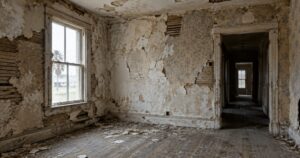
Listing: Interior of an abandoned building
- Source: Pexels individual photo page
- Creator: Francesco Paggiaro
- Date: Posted July 5, 2018. The page separately lists the photo as taken March 25, 2018.
- Original title: Abandoned House. The platform description reads “Crumbling interior of an abandoned building with collapsing beams and debris.”
- Rights advisory: The page labels the photo free. Check the current Pexels license before you use it.
- Caption: A deteriorating interior with exposed or collapsing structural elements and debris.
The platform calls this a building and gives no location. Don’t call it a house interior in a caption unless the photo itself confirms that.
Don’t enter a private, restricted, or unsafe building to get a similar shot. Use archived or properly licensed photographs.
Different Types of Abandoned Houses Pictures
These categories are this site’s own groupings, not an official classification of U.S. housing. Apply a label only when the record or the visible architecture supports it.
Historic Mansions and Large Homes
A large house gives a photographer façades, porches, and period detail. This example dates to the 1930s.
Listing: Fuquay Springs, North Carolina
- Source: Library of Congress photo record
- Creator: Arthur Rothstein, photographer (Farm Security Administration/Office of War Information)
- Date: September 1935
- Original title: Abandoned colonial mansion. Fuquay Springs. North Carolina
- Rights advisory: “No known restrictions,” with the Library of Congress guidance for FSA/OWI black-and-white photographs.
- Caption: A large wooden colonial-style mansion in a rural setting, cataloged as abandoned, photographed by Arthur Rothstein in September 1935.
Rural Farmhouses and Isolated Homes
A remote setting makes a good picture. Isolation says nothing about whether anyone lives there.
Listing: Ward County, North Dakota
- Source: Library of Congress photo record
- Creator: John Vachon, photographer
- Date: October 1940
- Original title: Abandoned farmhouse. Ward County, North Dakota
- Rights advisory: The record carries the Library of Congress statement that the FSA/OWI black-and-white negatives are in the public domain and free to use and reuse, and it links to the collection’s rights information.
- Caption: John Vachon’s October 1940 photograph of a farmhouse cataloged as abandoned in Ward County, North Dakota.
Keep the 1937 date visible so readers don’t mistake this for a current property photo.
Small-Town and Urban Houses
Town and city settings change the backdrop, from street frontage to neighboring buildings. One image can’t explain why a house became vacant.
Listing: Natchez, Mississippi
- Source: Library of Congress item record
- Creator: Carol M. Highsmith, photographer
- Date: October 10, 2008
- Original title: Abandoned houses, Natchez, Mississippi
- Rights advisory: “No known restrictions on publication.” The record asks for the credit line Carol M. Highsmith’s America, Library of Congress, Prints and Photographs Division.
- Caption: A cluster of deteriorated wooden houses cataloged as abandoned in Natchez, Mississippi, photographed in October 2008.
Old Cottages and Victorian Houses
Call a house Victorian only when the record or identifiable features support it. Otherwise describe it plainly, as in “two-story frame house with decorative porch trim.” This page has no cottage or Victorian example yet.
Historic and Vintage Abandoned House Photos
Archival photographs come with catalog records. A record that gives the original title, creator, capture date, and location is what separates a credited historic image from an unsourced repost.
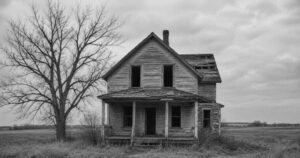
Three photos on this page come from the Farm Security Administration files:
| Photograph | Photographer | Date | Listed under |
|---|---|---|---|
| Abandoned colonial mansion, Fuquay Springs, North Carolina | Arthur Rothstein | September 1935 | Historic Mansions and Large Homes |
| Abandoned tenant house, Childress County, Texas | Dorothea Lange | June 1937 | Rural Farmhouses and Isolated Homes |
| Detail of abandoned house, central Ohio | Ben Shahn | Summer 1938 | Close-Up Pictures of Visible Neglect |
A catalog description is the archive’s description. It doesn’t verify a home’s legal status, and a house photographed in the 1930s tells you nothing about its condition today.
Build a before-and-after comparison only when you can confirm both images show the same property.
Keep this credit record for every image on the page:
| Field | What to record |
|---|---|
| Title and creator | As shown on the original record |
| Source and original file URL | Item page plus the file you downloaded |
| Capture date and location | Only if verified |
| License or rights advisory | Exact wording from the record |
| Credit line | As the license or archive requires |
Close-Up Pictures of Visible Neglect
A close-up isolates one surface or feature, so readers can see how a material weathers. Describe what the frame holds in plain, observable terms.
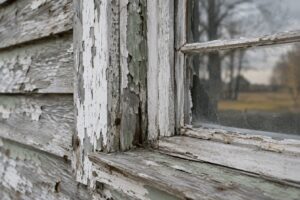
Source: Library of Congress — Untitled photo, possibly related to “Detail of abandoned house, central Ohio”
Creator: Ben Shahn, photographer
Date: Summer 1938
Original title: Untitled photo, possibly related to: Detail of abandoned house, central Ohio
Rights advisory: “No known restrictions.” Review the Library of Congress guidance for FSA/OWI photographs before republication.
Caption: A related black-and-white photograph of an old house in Ohio, cataloged by the Library of Congress as possibly associated with Ben Shahn’s 1938 abandoned-house image. Describe the visible architectural feature only after inspecting the photograph.
Peeling Paint, Damaged Siding, and Weathered Wood
Paint lifts, siding warps, and bare wood grays once it’s exposed. The picture shows surface condition, not when or why it happened.
Boarded or Broken Windows
A boarded window means someone covered an opening. A caption can say that much, but not who did it or why.
Damaged Roofs and Porches
Sagging rooflines and weathered porch boards show up well in a photo. Whether the structure is safe takes an inspection.
Overgrown Vegetation and Neglected Yards
Tall grass and climbing vines contrast sharply with a maintained yard. They don’t establish who lives there or who owns the lot.
Listing: House in an overgrown field
- Source: Pexels individual photo page
- Creator: Kerolos Safwat
- Date: Posted May 14, 2021
- Original title: Photograph of an Abandoned House. The platform description reads “An old abandoned house surrounded by an overgrown grassy field.”
- Rights advisory: The page labels the image “Free to use.” Verify the current Pexels license before publication.
- Caption: An old house surrounded by overgrown grass and vegetation.
The page gives no location, so the caption names none.
The U.S. Fire Administration publishes guidance titled “Reducing Arson at Vacant and Abandoned Buildings”. It’s a safety resource, and it offers no visual test for legal status.
Where to Find Abandoned House Pictures
Library of Congress and Historical Archives
Catalog records list titles, creators, dates, locations, and rights information. The Prints and Photographs Division holds the Highsmith and FSA/OWI photographs above.
Read each item’s record before you rely on it. “No known restrictions” is the Library’s advisory, and the Library says you must assess any remaining restrictions yourself.
State and Local Historical Collections
State archives, local historical societies, and public university collections are worth a search. This article hasn’t verified specific collections, so check each one’s search tools and terms.
Creative Commons Images
Creative Commons publishes an overview of its licenses. Some restrict commercial use or adaptation, so read the one attached to your image.
Pexels, Unsplash, and Pixabay publish their own licenses, separate from Creative Commons. An individual photo can carry extra conditions, so read the license on its page.
Photographer Portfolios and Licensed Stock Libraries
Portfolios and stock libraries set their own terms. Match them to your plan, especially for commercial use. For more exterior options, compare Dreamstime: Abandoned House Outside Images, Pictures and Stock Photos, Shutterstock: Abandoned Dwelling Images, Depositphotos: Abandoned House Stock Photos, and Adobe Stock: Abandoned House Night Photos.
| Source type | Image-search page or gallery | Best use | What to verify before reuse |
|---|---|---|---|
| Free photo sites | Pexels: Free Abandoned House Photos
Unsplash: Abandoned House Photos |
Contemporary exteriors, interiors, rural settings, general visual reference | Open the individual photo page and check the creator, title, date if listed, license, and restrictions. Search-result counts change, so don’t quote them. |
| Freemium and background libraries | PNGTree: Abandoned Houses Pictures, Stock Photos and Background Images
Vecteezy: Abandoned House Stock Photos, Images and Backgrounds for Free Download |
Backgrounds and stock-style exteriors | Whether the exact asset is free or paid, whether it needs attribution, and whether commercial use is allowed. |
| Paid stock libraries | Alamy: Abandoned Home Inside Stock Photos and Images
iStock: Abandoned House Interior Images and Stock Photos Depositphotos: Abandoned House Stock Photos Shutterstock: Abandoned Dwelling Images Dreamstime: Abandoned House Outside Images, Pictures and Stock Photos Magnific: Abandoned House Interior Photos |
Licensed interior, exterior, and night photography | The asset’s price, license type, editorial-only limits, model and property releases where relevant, and whether edits are allowed. |
| Documentary and specialist photography | Abandoned America: Abandoned Houses and Homes | Location-specific documentary photography and inspiration | The original photographer. Ask permission unless an explicit license covers your use. Abandoned America states that its photographs are copyrighted. |
| Editorial roundups and boards | Dornob: Houses Gone Wild: Haunting Photos of Abandoned Homes
Bored Panda: Interesting Old Abandoned Houses Pinterest: Abandoned House in the Middle of Nowhere Pictures |
Finding subjects and tracing photo credits | Follow each image back to its creator or rights holder. A roundup or a Pinterest pin grants no reuse permission. |
Treat every entry as a lead. None of these pages establishes an individual image’s creator, date, or reuse rights.
More Abandoned House Picture Searches
These galleries cover different visual themes. They are search and inspiration pages, and none shows that a pictured property is legally abandoned.
- Historic homes and photo galleries: Bored Panda: Interesting Old Abandoned Houses, Dornob: Houses Gone Wild: Haunting Photos of Abandoned Homes, and Abandoned America: Abandoned Houses and Homes.
- Houses in woods or isolated settings: Pinterest: Abandoned House in the Middle of Nowhere Pictures. Trace any image to its original source before reuse.
- Interior, exterior, and night images: the iStock interior collection, the Dreamstime exterior collection, and the Adobe Stock night search.
- Free-image discovery: search Pexels, Unsplash, and Pixabay, then verify each image’s license.
Searches for “abandoned house inside,” “pictures of abandoned houses in the woods,” “old abandoned house,” and “abandoned house at night” describe different intents. Searches for drawings or for abandoned houses near you need other resources.
How to Tell What an Abandoned House Picture Actually Shows
A picture can show deterioration or an apparently empty space. Vacant and abandoned are different terms.
The Census Bureau’s vacancy categories include homes used seasonally, occasionally, or for recreation, as its ACS vacation-home FAQ explains. A 2023 Census analysis is titled “Most U.S. Vacant Housing Is Seasonal Housing”, which is why a vacancy statistic can’t count abandoned houses.
Legal status, ownership, foreclosure, condemnation, and sale availability each need their own evidence. For a specific property, look to local property, tax, court, listing, or code-enforcement records. For the visible clues, see our guide to the signs a house is really abandoned.
| What you see or find | What it can support | What it can’t establish alone |
|---|---|---|
| Peeling paint or an overgrown yard | A description of visible condition | Legal abandonment, ownership, or sale status |
| An archive caption saying “abandoned” | An attributed description from the archive | Current legal status |
| A Census vacancy figure | A statistic under the Census definition | A count of abandoned houses |
| An image license or rights advisory | The stated terms for that image | Clearance of every possible third-party right |
Can You Use Abandoned House Pictures on Your Website?
Sometimes, and the answer sits with each image. This is general information, not legal advice.
Check the Image’s License or Rights Advisory
Find the exact record or license page for the image. A source isn’t free for commercial use unless that image’s rights status says so.
Archive images aren’t automatically public domain. The Library of Congress says it generally doesn’t own the rights to its collection materials, and “no known restrictions” doesn’t clear every possible use.
Credit the Photographer or Archive Correctly
Follow the attribution the license or archive requests, and write the credit line down before you publish.
Keep the caption and the credit separate. The caption says what the image shows, and the credit names the creator, date, repository, and source record.
| Caption | Credit line |
|---|---|
| A tenant house cataloged as abandoned in Childress County, Texas, photographed in June 1937. | Photograph by Dorothea Lange, June 1937. Library of Congress, Prints and Photographs Division. |
For a Creative Commons image, also list the original title, the exact license with its link, and whether you cropped or changed the image.
Confirm Commercial Use and Editing Permission
Check whether the terms allow commercial use, cropping, or other changes. The Library of Congress rights and access guidance was written for its panoramic photographs collection, so confirm it covers the collection you’re using.
Keep an Image Source Record
Before an image goes into an article, log these fields in a spreadsheet or document:
| Field | What to enter |
|---|---|
| Image ID | A running number such as AH-PIC-001 |
| Original image URL | The individual image or archival record |
| Creator and original title | Exactly as the source gives them |
| Date | Date photographed, kept separate from upload or publication date |
| Location | Only what the source documents |
| Rights advisory and license | Exact statement and license link, or “permission required / unclear” |
| Caption and credit line | What is visible, plus the attribution the source requires |
| Placement and status | Where it runs, and whether it is verified, needs rights review, or awaits permission |
Add the commercial-use clearance status and the date of your last rights check to each entry.
How Can I Photograph Abandoned Houses Safely and Legally?
Good abandoned house pictures do not require getting close to a dangerous building. Photograph from public land, or with the owner’s permission.
Never enter a private, restricted, or unsafe building to get a picture. A zoom lens helps you capture details from a safe distance, and daylight makes hazards easier to see.
If you plan to look for subjects yourself, start with our guide on how to find abandoned houses.
Frequently Asked Questions
Where can I find abandoned house pictures?
Try official photo archives, historical collections, photographer portfolios, and licensed image libraries. Read the individual image record before you reuse anything.
Where can I find abandoned house interior pictures?
Look in sourced archival collections and licensed photography. Entering a building without authorization is no way to get them.
Are abandoned house pictures free to use?
Not necessarily. Viewing or downloading a photo grants no permission to republish it, so check the image’s license for commercial use and adaptation terms.
Do pictures prove that a house is abandoned?
No. A picture documents visible conditions, and legal status or occupancy needs separate evidence.
What are common visible signs of neglect in house pictures?
Peeling paint, damaged siding, broken or boarded windows, roof deterioration, weathered porches, and overgrown vegetation. They describe condition and don’t work as an abandonment test.
Are vacant houses the same as abandoned houses?
No. Census vacancy categories include seasonal, occasional, and recreational homes, so vacancy data can’t count abandoned houses. See our guide to abandoned vs. vacant property.
Can I use historical abandoned-house photos?
Possibly, depending on the image’s rights status. Verify the original record, creator, date, and rights advisory first.
Can a picture tell me whether a property is for sale?
No. You need a current, reliable listing or another property record.

AbandonedHouse
We explore the history, architecture and context behind America’s overlooked places through research-led storytelling and responsible documentation.