

Research & field stories
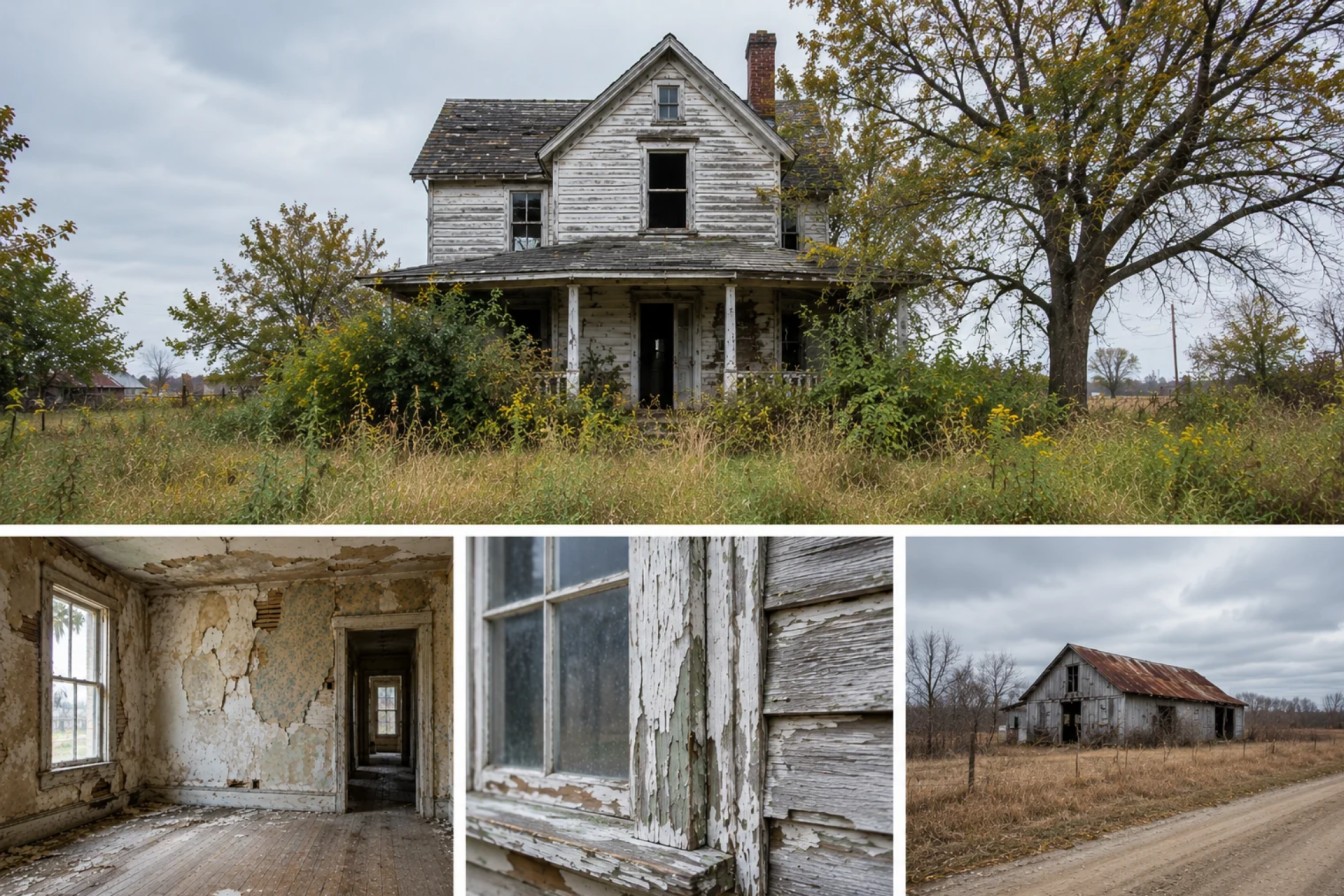
Abandoned houses for sale are homes offered through ordinary listings, bank-owned inventories, county tax sales, government auctions, or land banks. An abandoned house is a home whose owner has stopped maintaining or occupying it, but it still has a legal owner. Buy only through a lawful sale, after checking ownership, sale terms, and total costs.
You can find houses that look abandoned in ordinary real-estate listings, bank-owned inventories, county tax sales, government auctions, and old-house marketplaces. No channel lists “abandoned houses” as a verified category, and the word carries no standard legal meaning in a listing.
A sagging porch or a yard of knee-high weeds does not tell you the owner walked away. It also does not tell you that the person advertising the house can legally sell it.
National statistics cannot settle the question either. The Census Bureau’s 2024 American Community Survey (ACS) estimated 14.0 million vacant housing units, 849,400 classified “for sale only,” and 4.916 million in a broad “other vacant” group. None of those numbers counts abandoned homes that you can buy.
The federal sources reviewed for this article do not provide a national count of legally abandoned houses currently available to buy. Local, state, and private lists may exist. Treat every result as a lead until you confirm the address, the seller, the sale terms, and the total cost.
Quick Answers
- Is “abandoned house for sale” a real listing category? No. Leads appear in regular listings, bank-owned and foreclosure channels, county tax sales, government sales, and old-house marketplaces.
- Does a neglected look prove abandonment? No. A run-down appearance, a vacancy, or a foreclosure notice does not prove a house is legally abandoned or that the seller can transfer it.
- How many abandoned houses are for sale nationwide? The reviewed federal sources give no count. The Census figure of 14.0 million vacant units (2024 ACS) covers all vacant housing, not abandoned homes for sale.
- What should I verify first? The parcel, the owner of record, the seller’s authority, the sale terms, and the full cost.
- Is the asking price the real cost? No. Inspections, title work, taxes, repairs, insurance, and closing costs come on top of the price or opening bid.
What Is an Abandoned Property?
“Abandoned property” has no single legal meaning that applies everywhere. Laws, research studies, and surveys each define the term for their own purposes, so a source’s definition matters more than the word itself.
This section sorts the terms you will meet while searching. Keep them separate, because each one points to a different kind of risk.
Abandoned vs. Vacant vs. Distressed
A vacant property is unoccupied under a source’s definition. Vacancy says nothing about abandonment or whether the property is for sale.
Abandoned is a descriptive word, or a term inside a particular legal or research definition. It is not a single legal status across the country.
Distressed is a broad market label for a property with financial, physical, or sale-related trouble. Name the specific trouble, such as unpaid taxes or storm damage, instead of treating the label as a legal category.
An empty house usually still has someone who holds title, owes the taxes, or carries a mortgage. That person may live far away, be tied up in an estate, or simply be slow to act.
Appearance cannot settle legal status either. HUD-affiliated research in Cityscape (2022) has explored visual methods for flagging potentially abandoned houses, and a house that looks abandoned still needs a records check.
Foreclosure, REO, Tax-Lien, and Tax-Deed Properties
Foreclosure is a legal process that enforces a secured debt, and a property can sit at any stage of it. REO, short for real estate owned, commonly refers to a property a lender holds after a foreclosure-related process.
Tax-lien and tax-deed sales both come from a jurisdiction’s tax enforcement. They are different transactions, and what a buyer receives depends on state law and the sale type. The later section on tax sales explains how to compare them.
Two more terms cause confusion. A condemnation is a decision by a local authority, so a survey label such as “possibly condemned” is not that decision.
Zombie property is a term some research and policy discussions use for property caught in an incomplete foreclosure process. A study in the Review of Finance, published online April 26, 2026, examines New York and New Jersey policy and mortgage data it describes as covering 2012 to 2018. It is not a universal legal definition, and it does not offer a current national list of homes for sale.
What Census Vacancy Statistics Can—and Cannot—Tell You
The table below shows the 2024 ACS categories that people most often confuse. These are survey estimates with margins of error, published May 27, 2026.
| Category | 2024 ACS estimate (housing units) | Margin of error (±) | What it covers |
|---|---|---|---|
| All vacant | 14,000,000 | 145,200 | Every unoccupied unit, including rentals, seasonal homes, and units sold but not yet occupied |
| Vacant, “for sale only” | 849,400 | 21,720 | Vacant units the survey classified as for sale only |
| “Other vacant” | 4,916,000 | 70,000 | A broad group with several reasons for vacancy |
These are 2024 ACS 1-year housing-unit estimates, not a count of legally abandoned homes currently for sale. Each figure represents a different category, and you should not combine them or relabel them as abandoned-property inventory. The report says most vacant homes were not available to buy or rent. It also lists 4.3 million units held for seasonal, recreational, or occasional use, which are another vacancy type altogether.
“Other vacant” is the largest group, and it mixes situations. The report says it includes units vacant because of foreclosure, units being repaired or renovated, and units that were abandoned or possibly condemned.
The Census subject definitions carry an “Abandoned/Possibly condemned” subcategory. That label is a survey category, and it is not a court finding, a title determination, or a condemnation order.
The survey also relies on who answers. When a sampled address does not respond, field staff learn its status from landlords, owners, neighbors, rental agents, and others. The result is a snapshot of how someone described the unit, not a title search.
The same report cautions that vacancies concentrated in low-demand areas add little to the supply of homes in high-demand cities. Read national totals as background, not as a shopping list.
Where to Find Abandoned Houses for Sale
Each discovery route shows a different kind of property and a different kind of seller. A directory or listing site helps you search, but it cannot prove that a house is available, abandoned, or worth buying.
Use the matrix below to pick a starting point. The “does not prove” column shows what each channel leaves unanswered.
| Where to search | What it may show | Who controls the sale | Verify before acting | What it does not prove | Starting point |
|---|---|---|---|---|---|
| Conventional listings | Fixer-uppers, estate sales, neglected homes | Owner, agent, or broker | Owner of record, condition, seller authority | That the house is abandoned or cheap | Local MLS-based sites and agents |
| Foreclosure and bank-owned listings | Homes held by lenders or agencies after foreclosure | Lender, servicer, or agency | Actual seller, sale stage, sale terms | That every foreclosed home sits vacant or is discounted | USA.gov real-estate directory |
| County and local tax sales | Properties offered through tax enforcement | County or state tax authority | Sale type, redemption rules, title effects | That you receive clear title | County tax collector or treasurer |
| Government sales and auctions | Homes, land, and seized property | The selling agency or its auction channel | Whether the lot is real estate, deposit, deadlines | That an auction lot is a house | USA.gov real-estate and auctions pages |
| Old-house and low-price marketplaces | Older homes and projects | Seller, agent, or the site as intermediary | Who the site represents, live status | That the listing is current or accurate | Live listing page and its seller |
| Owner outreach | Vacant homes with a findable owner | The owner of record | Ownership, liens, willingness to sell | That the owner can transfer title | County property and land records |
Recheck each entry on the day you use it. Search results and agency inventories change without notice.
Conventional Real-Estate Listings and Fixer-Uppers
Many neglected houses sell through the same agents and listing sites as any other home. Search for phrases such as “as is,” “needs work,” “investor special,” or “estate sale,” and read the full description.
The listing is a marketing page. The word “abandoned” in an ad is a description, not a legal finding.
Foreclosure and Bank-Owned Property Listings
USA.gov says federal agencies acquire real estate through foreclosure, forfeiture, or failed banks, then sell it by auction or offer. Its directory links to programs such as Fannie Mae’s HomePath, FDIC sales of homes from failed banks, USDA sales, and HUDHomes.
Confirm who actually holds the property and which stage of the process it has reached. A foreclosure notice alone does not tell you the home is for sale.
County and Local Tax-Sale Resources
Counties and states sell properties, or claims against them, to collect unpaid property taxes. Procedures differ by place, so start with the county tax collector or treasurer and read the official sale notice.
Tax-sale buyers can face redemption periods, added costs, and title consequences, according to a 2022 National Consumer Law Center report. State law and the local procedure control what applies to any one sale.
Government Real-Estate Sales and Auctions
Some agencies on the USA.gov directory hold auctions and some accept offers. The page includes U.S. Marshals Service sales of seized homes, condominiums, commercial real estate, and land.
The separate auctions and sales page points to agencies such as GSA, Treasury, and the U.S. Marshals Service. Many listings there are not houses, so confirm the lot is real property before you read further.
Land Banks and Abandoned Houses for Sale
A land bank is a public entity that acquires tax-foreclosed or otherwise distressed properties and sells them, often with conditions on repair or occupancy. Search for the land bank in the county or city where you want to buy, then read its inventory, eligibility rules, and sale terms on its own site. Land banks are not the same in every place, so confirm whether a listing is a house, what condition it is in, and what the buyer must do after the sale.
Specialty Old-House and Inexpensive-Home Marketplaces
Sites that focus on historic homes, fixer-uppers, or low prices can surface properties that mainstream searches bury. Before you trust a listing, find out whether the site is the seller, an agent, an auction administrator, or an intermediary.
Open the live property page and check its date, price type, and contact. A stale listing is a lead that has gone cold.
Direct Owner Research and Lawful Contact
If you spot a vacant house, the owner of record is often findable through county property records. A polite letter to that owner is a lawful way to ask whether they would sell.
Stay off the property unless the owner or a lawful authority grants permission. Vacancy does not give anyone the right to enter or take possession.
How to Buy an Abandoned House in Five Steps
The process runs in a fixed order, and skipping a step is where buyers lose money. Procedures and records differ by state and county, so treat these steps as a general screening workflow and confirm local rules.
Step 1: Find a Potential Property
Start with the channels in the matrix above and search one jurisdiction at a time. For each lead, record the listing or notice URL, the address or parcel number, the price type, who is selling, and the date you checked.
Treat the result as a lead, not a deal. Nothing at this stage tells you the property is available or legally abandoned.
Step 2: Verify Ownership and Sale Authority
Write down the street address, then find the parcel number on the county assessor’s website. Addresses can be wrong, duplicated, or missing in rural areas, and the parcel number points to the actual lot.
Next, look up the parcel with the county assessor and the recorder or register of deeds. These offices show the owner of record, the recorded deeds, and often the mortgages and liens.
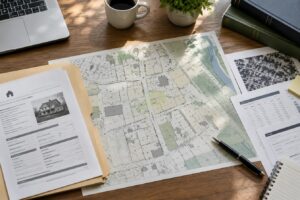
Check the county tax collector for unpaid taxes and the court system for probate or foreclosure filings. Unpaid taxes, liens, and open estates can all sit between you and a clean transfer.
Then ask for proof that the person or entity proposing the sale can convey the property. The listed owner is not always the person with that authority, and a tax record alone does not prove marketable title.
An online lookup is a starting point, and one search rarely settles every question. A title professional or real-estate attorney can search the records and explain what each item means in your state.
Step 3: Inspect the Property and Estimate Repairs
Get permission before anyone enters, then hire a licensed inspector to assess the structure, roof, plumbing, and electrical systems. A walk-through by a buyer does not replace a professional inspection.
Ask contractors for written estimates tied to the inspection findings. The cost section below lists what to include, and it offers no national average because the sources reviewed here do not establish one.
Step 4: Make an Offer or Place a Bid
Know which price you are looking at. An asking price, an opening bid, a minimum bid, and a final sale price are four different numbers.
Set your ceiling from the full budget, not from the advertised price. Then read the sale terms for deposits, buyer fees, payment deadlines, and any financing limits before you commit.
Step 5: Complete Closing and Confirm Possession
Closing moves title to you through the process the sale terms and your state’s law require. Have a title professional or attorney review the transfer documents and confirm what was recorded.
Winning a bid or signing a contract does not mean you can walk in. Confirm in writing when and how you receive possession, and what happens if someone occupies the property.
Foreclosure, Tax Sales, and Government Auctions: What Buyers Need to Know
These sale routes follow different rules, so never assume one process fits them all. The table shows what to compare, and every “check sale terms” cell points back to the actual notice or contract.
| Sale route | Who administers it | Documents to check | Inspection access | Financing | Legal variation |
|---|---|---|---|---|---|
| Conventional purchase | Seller or listing agent | Check sale terms | Usually arranged in the contract | Check sale terms | Varies by state |
| Foreclosure-related | Lender, servicer, trustee, court, or agency | Check sale terms | Check sale terms | Check sale terms | Varies by state and stage |
| Tax sale | County or state tax authority | Check sale terms | Check sale terms | Check sale terms | Varies by state and sale type |
| Government sale | The agency or authorized channel | Check sale terms | Check sale terms | Check sale terms | Varies by agency and sale |
Conventional Sale vs. Foreclosure Purchase
A conventional sale runs through a contract that you and the seller negotiate. A foreclosure-related sale depends on where the property stands in the process and who controls the sale.
Not every foreclosed house goes to auction. Read the listing, the court or trustee notice, or the lender’s terms to learn which route applies.
Tax-Lien vs. Tax-Deed Sale
The two names describe different transactions, and what you receive depends on state law and the sale procedure. Do not assume a tax sale transfers ownership right away or clears every other problem.
Read the county’s official instructions and the current statute for your state. The NCLC report is a 2022 secondary source, so treat it as background and not as current law.
Deposits, Deadlines, Redemption, and Possession
Agencies and counties set their own eligibility rules, deposits, and deadlines. USA.gov notes that government auctions and sales may use online, in-person, or mail bidding, so read the terms for the specific sale.
Redemption lets certain parties reclaim property after a sale, and the periods are narrow and context-specific. The two IRS examples below show how narrow, and neither one is a general rule for tax sales.
- In certain foreclosure sales involving a federal tax lien, the IRS may hold a redemption right lasting 120 days or longer if state law provides a longer period. See IRM 5.12.5, revised August 6, 2024.
- Certain real-property sales that follow an IRS seizure may carry a 180-day redemption period. See IRM 5.10.5 and the IRS auction notice resource, and read the individual sale notice.
Do not merge the two periods, and do not apply either one to a state tax sale. Transfer and possession follow the sale terms and the law, so confirm both before you plan any work on the property.
How Much Does an Abandoned House Really Cost?
The advertised price is the smallest piece of the story. A full budget adds the purchase, the paperwork, the repairs, and the carrying costs.
No reliable national average for rehabilitating abandoned homes appears in the sources reviewed here, so this article offers none. Get property-specific inspections and contractor estimates before you commit.
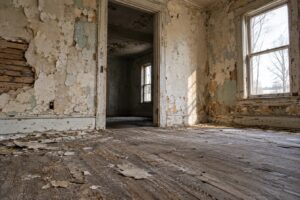
Purchase price or opening bid. A low opening bid does not predict the final price, because bidding can climb past it.
Inspections, title work, legal fees, taxes, and closing. Each one depends on the property and the sale route. Ask for a list of fees before you bid, because surprises tend to arrive after you win.
Repairs, utilities, insurance, cleanup, and permits. A neglected house may need cleanup, repairs, new utilities, insurance, and permits before anyone can live in it. Local code can raise the scope of the work.
Use the worksheet below as a planning framework, and fill each line with a real quote or fee schedule. It carries no default dollar amounts.
| Cost item | Your estimate | Source of estimate | Date |
|---|---|---|---|
| Purchase price or winning bid | |||
| Buyer’s premium or auction fees | |||
| Inspections | |||
| Title search and insurance | |||
| Legal fees | |||
| Back taxes, liens, or assessments | |||
| Cleanup and debris removal | |||
| Repairs and renovation | |||
| Permits and code compliance | |||
| Utilities and reconnection | |||
| Insurance | |||
| Financing and closing costs |
FHA 203(k) is one financing option to ask a lender about. HUD says the program insures mortgages that cover buying or refinancing a home at least a year old plus its rehabilitation, and its page describes the Limited 203(k) as financing up to $75,000 of repairs.
Eligibility, property requirements, and lender approval all apply. Confirm current limits with an FHA-approved lender before you plan around any figure, because not every abandoned or damaged house qualifies.
Risks of Buying an Abandoned Property
Treat each house as a lead until the checks below clear. This is a general screening aid and not legal, tax, title, engineering, or financial advice. Learn the warning signs in our guide to abandoned house buying scams.
Ownership and Title Problems
The biggest risk is paying for a property the seller cannot transfer. Recorded liens, unpaid taxes, open estates, and court filings can all complicate title.
An online record rarely shows the whole picture. Have a title professional or real-estate attorney review the records before you pay a deposit.
Structural and Environmental Hazards
Roofs, foundations, plumbing, and electrical systems can fail quietly in a neglected house. Ask a licensed inspector to assess them, and ask which environmental concerns the inspector can evaluate and which need a specialist.
Photos and listing descriptions do not reveal these problems. Only a professional inspection can show them.
Insurance, Financing, and Code Compliance
Call an insurer and a lender early, because both may hesitate to cover a badly damaged or vacant house. Ask what coverage and loan types they offer for this specific property.
Ask the local building office what code work the home may need before anyone can occupy it. Code requirements can raise the budget well past the price you paid.
Occupancy and Legal Access
A house that looks empty may have occupants, stored belongings, or an owner who objects to entry. Enter only with permission from the owner, the seller, or a lawful authority.
Vacancy does not give anyone the right to enter or take possession. Confirm access terms in writing before you schedule an inspection or begin work.
How to Search for Abandoned Houses by State or County
Narrow the search to one jurisdiction, then follow that place’s own rules. This article does not rank states or cities, because no current, comparable dataset supports a “most abandoned houses for sale” list.
Pick the county where you want to buy and look for its assessor, recorder, and tax collector. Then use the USA.gov directory to see which agencies sell homes in your state.
For a specific sale, find the office that runs it, such as the county tax collector, the sheriff, a trustee, a court, or an agency. Read its current notice and the statute for your state, and note the effective date.
Can You Buy an Abandoned House for Free?
Do not count on it. A low or even zero opening bid is a starting number, and it does not predict the final price, the total cost, clean title, or a completed transfer.
If an example claims a free or nearly free house, ask for the price type, the sale terms, and the date. Then add taxes, repairs, legal work, and closing costs to see what the house really costs.
Common Mistakes When Buying an Abandoned Property
- Trusting appearances. A run-down look does not establish abandonment or ownership status.
- Assuming an online record proves clear title. One lookup may miss liens, estates, or filings.
- Confusing an opening bid with the final price. Fees and competing bids change the number.
- Skipping inspections. Hidden damage can outrun the savings.
- Applying one place’s rules everywhere. Redemption and sale procedures vary by state, county, and sale type.
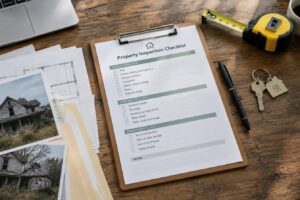
Abandoned-House Buyer Checklist
Use this list before you offer, bid, or pay for anything. Completing it does not guarantee a safe purchase or clear title.
- I have the exact address and the parcel number.
- I know the owner of record and have confirmed it with county records.
- The seller or sale authority has shown the right to transfer the property.
- I checked for liens, unpaid taxes, probate, and court filings.
- I read the live listing or official sale notice and recorded its date.
- I know the price type: asking price, opening bid, minimum bid, or final price.
- I understand the deposit, deadlines, redemption terms, and possession rules.
- I have permission for any entry and a plan for a licensed inspection.
- I priced repairs, utilities, insurance, permits, and closing costs.
- I talked to a lender or insurer about this specific type of property.
- I checked local code requirements.
- I consulted a title professional or real-estate attorney.
Final Takeaway
Treat every abandoned-looking house as a lead until its identity, sale status, seller authority, and terms check out. The buyers who come out ahead are the ones who verify first and bid second.
Start with one county, pull the parcel records, and read the actual sale notice before you spend on an inspection. A few hours of records work can save you from a purchase the seller had no right to make.
Frequently Asked Questions
Can you legally buy an abandoned house in the United States?
Sometimes, if a lawful sale offers it and the seller or administering authority can transfer it. Appearance or vacancy alone does not make a house legally abandoned or available. The specific transaction and your state and local rules decide.
How do I find out who owns an abandoned-looking house?
Get the exact address and parcel number, then search the county’s property and recorded land records. Look for title complications, and confirm that the proposed seller can convey the property. A single online lookup may not settle every issue.
Are abandoned houses actually free?
Assume they are not. A low or zero opening bid is not the final price or the total cost. Sale terms, title work, taxes, repairs, and legal fees all add up.
Can I buy an abandoned house directly from its owner?
If you can identify an owner who is willing and legally able to sell, a direct purchase may be possible. Verify the recorded ownership, the seller’s authority, and any title issues first. Do not treat vacancy as permission to enter.
Can you buy a foreclosed house before an auction?
It depends on the property’s stage, who controls the sale, and local procedures. No universal yes-or-no rule exists. Check the actual listing, the court or trustee process, and your area’s requirements.
Are tax-sale properties cheaper than ordinary listings?
The sources reviewed do not show a universal price advantage. A fair comparison needs real sale prices, comparable properties, transaction costs, and the sale type. An opening bid alone does not prove a bargain.
Can a heavily damaged house qualify for financing?
Some eligible purchase-and-rehabilitation deals may qualify under FHA 203(k), subject to program, property, and lender requirements. Not every abandoned or severely damaged house qualifies. Ask an FHA-approved lender about the specific property.
How much does it cost to restore an abandoned house?
No reliable national average appears in the sources reviewed for this article. Costs depend on condition, location, scope of work, and code requirements. Get inspections and property-specific estimates.
Can I just claim an abandoned house by moving in?
No. Moving into a house does not make it yours, and an empty house still has an owner. Adverse possession is a legal claim that a court may recognize only if strict state requirements are met over a long period, and the rules vary by state. Check the adverse possession rules by state before you act, and do not enter a property without permission.

AbandonedHouse
We explore the history, architecture and context behind America’s overlooked places through research-led storytelling and responsible documentation.
More stories for curious minds
Pros and Cons of Buying an Abandoned House
A run-down house with a low price can look like a steal, and the pros and cons of…
How to Buy an Abandoned House: Step-by-Step (US)
How to buy an abandoned house: find a property, identify the owner through county assessor and tax records,…